Wednesday, July 18, 2007

Buddy Carlyle's Moment of History


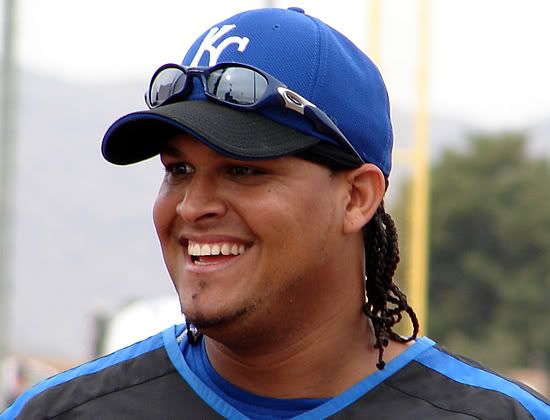
Edward "Buddy" Carlyle, Jr, has been the very definition of "journeyman" pitcher over the last ten years. Drafted out of Bellvue East HS (Nebraska) in 1996, the Cincinnati Reds assigned Carlyle to their rookie league team in Princeton. Two years later he was traded to the Padres' organization, and continued to put up good (if not overwhelming) peripheral numbers in the minors. His 3-to-1 K:BB ratio was of particular note, and was probably part of the reason the Padres gave Carlyle his "Cup of Coffee" in late August, 1999. A little less than eight years later, Carlyle would become a member of a quite prestigious group- those who have pitched an immaculate inning.


A little over a year after his major league debut, Carlyle was sold to the Hanshin Tigers of the Japan League. Following about a season of work overseas, Carlyle signed a minor league contract with the Royals, and followed that up with other minor league contracts with the Dodgers, Yankees, and Marlins before signing with the Braves this offseason. In nine starts, Carlyle has proven to be a league-average starter and continues his good command, striking out 38 to just 13 walks in 51 innings. None of the strikeouts were as momentous as the ones that came during the fourth inning of his game on July 6, 2007.


Carlyle had calmed down after allowing two runs in the bottom of the first, and in the top of the fourth recorded his first career MLB run batted in, on a line drive single to center. He then took the hill for the bottom of the frame and faced Khalil Greene, whom he set down on three pitches. Russell Branyan followed, fouling off two pitches and missing the third strike. Jose Cruz Jr stepped up and took the first pitch and missed swinging at the final two. Buddy Carlyle had recorded an immaculate inning, just the 37th pitcher to do so since 1958, and only the 40th time such an impressive moment of pitching dominance had occured. Inexplicably, the mlb.com recap of the game failed to call this feat by its correct name, instead going with the verbose "pitchers who have struck out three batters on nine pitches." Immaculate Innng is way more... immaculate, no?


So without further ado, we would like to present Buddy Carlyle with the Immacualte Inning Lifetime Achievement Award, reserved for those who acheive this amazing and rare feat. Congrats Buddy, and get thee to a Publix for your complementary cookies.


Video can be found in the links here.

Mike Vick and Nike

Listening to Mike and Mike in the morning, the story of the day is, of course, the indictment of Falcons QB Michael Vick. Mike Golic tried to make comparisons to Don Imus, saying that Imus was fired only after sponsors started pulling their ads from Imus' show. Golic intimated that the Falcons and the NFL could be pressured in much the same way to suspend Vick. Mike Greenberg pointed out that the Humane Society has "all their guns ready to go," and will be pressuring NFL sponsors. He then suggested that Nike is a likely target of this pressure.

Yes, that's Nike, the company who has admitted to using child labor, involved in such practices in Pakistan, Vietnam, China, and Indonesia.

Nike: for animal rights, against human rights. Seems fair, and consistent, right?

What Vick allegedly run out of his Virginia estate is disgusting. Let's just not pretend that Nike is an honorable company if it makes a stance against this.

Tuesday, July 03, 2007

Edwar's Big Night

Followers of baseball know that it is almost impossible to do something that no one else in the history of the game has done. The joke during the Yankees 1996-2001 dynasty always was that if something weird happened, Don Zimmer could tell you when it had happened before. I'm not nearly as old as Don Zimmer, but I do have Baseball-reference.com, whose Play Index is as close as I'm going to get, at least from 1957. You can search (with a subscription) for pretty much any event.

Last night, it was the ninth inning of the Yankees' game, and the good guys had an 8-0 lead. Lots of good things had happened in the game, such as Chein-Ming Wang having another strong outing, a home run from Robinson Cano, and some slick defensive plays. The only thing to look forward to in the top of the ninth was Edwar Ramirez. The 26-year old journeyman reliever re-invented himself a few years ago, adding what has been described as a "Bugs Bunny" changeup.

He didn't disappoint. While not an immaculate inning, Edwar struck out the side in his first inning of his major league debut, setting down pretty good hitters- Michael Cuddyer, Justin Morneau, and Lew Ford. I turned to Baseball-Reference.com to ask: how many times has a pitcher thrown exactly one inning in his major league debut, and struck out the side?

The answer, since 1957, is now five. Surprisingly, all four have occurred in the last ten years (OK, not so surprising, since one inning appearances used to be pretty uncommon). Jordan De Jong of the Blue Jays did it this year; the only pitcher I recognize is, of course, Braden Looper. So that is a significant finding; here is a pretty rare event in baseball history.

Of course, not all pitchers throw only one inning in their major league debut. This was a little harder to account for, so I limited myself to Yankees pitchers since 1957. There have been 47 Yankees pitchers in 50 years to strike out at least three hitters in their major league debuts. Of these, only two whiffed three in their first major league inning. Al Leiter did it in the first inning of his first start in 1984- but he also allowed two hits and a run. The only pitcher, other than Edwar, to set down the side in order with strikeouts in his major league debut is Stan Bahnsen, who retired the Red Sox in order September 9, 1966. Bahnsen went on to strike out another 1,356 hitters over the course of his 16 year career.

Sure, no one else besides me will care about something like this. They'll focus on Edwar's filthy changeup, a palm-ball like pitch which dives down and in to right handed hitters at 78 mph, complimenting his accurate 91 mph fastball. And they'd be right to get excited about a pitcher who struck out 46 hitters in 26 innings in AA and AAA this year. But sometimes, it's all about the random stats.

Friday, June 29, 2007

A Comparison

Sam versus Josh McRoberts

Went to Duke

Sam:yes Josh:yes


Graduated from Duke

Sam:yes Josh:no

Drafted in the first round

Sam: no Josh:no

Edge: Sam


No, I'm not still bitter

Wednesday, June 27, 2007

Is Torre's fatal flaw common?

For the past few years, I have on numerous occasions started yelling at my TV or computer screen during a completely predictable situation. It occurs when my favorite baseball team is on the road, in a tie game, in the ninth inning or later. For some reason, the manager of that team (Joe Torre) refuses to pitch his best reliever (Mariano Rivera) in a situation where there is no margin for error. If the home team scores— it’s game over, end of story. I am infuriated by this failure of logic, of this apparent managing towards a made-up statistic. “There could be a Save Situation later!” thinks the manager, and keeps his best reliever on the bench while a worse pitcher gives up three hits and the game is over. At no time was this more frustrating than Game 4 of the 2003 World Series, when I watched in horror as Jeff Weaver gave up a home run to Alex freaking Gonzalez (career SLG: .396) in the 12th inning while Rivera watched from the bullpen.

I've had flashbacks to that a lot recently, because Joe Torre has done this twice in the past four days. On Saturday in San Fransisco, after Alex Rodriguez belted his seventh ninth-inning home run to tie the game, Torre put in Luis Vizcaino to pitch the ninth inning of a tie game. At that point, Vizcaino’s ERA was 5.71 and he had pitched an inning the night before. Torre had also burned Mike Myers, Brian Bruney, and Ron Villone (all in the seventh inning), followed by Kyle Farnsworth in the eighth. This left him with Vizcaino, Scott Proctor, and Rivera. In the ninth inning of a tie game, Torre went with the worst available option. It worked out for Vizcaino and then for Proctor, who pitched the eleventh and twelfth. In the top of the thirteenth, with the go-ahead run on first and two outs, Torre allowed Proctor to bat and he struck out. In the bottom half of the inning, Torre finally got someone up in the bullpen- but it was not Rivera, it was Roger Clemens. But Clemens would have to wait a day to make a relief appearance, as Proctor allowed a run and the game was over.

Then, last night, as the Yankees offense continued to struggle and put up runs for the brilliant Andy Pettitte, Torre repeated this maneuver. After Kyle Farnsworth pitched a scoreless eighth, Torre brought in Scott Proctor again in the ninth. Proctor allowed a walk, a single, a popup, and a walk to load the bases. Rivera was still not warming as Proctor’s 3-2 pitch to Ramon Hernandez walked in the winning run.

There are many Yankees fans that agree with me, that Torre is responsible for these losses because he manages to the save statistic. This website counts the number of such losses. Even a loyal Torre follower like beat writer Pete Abraham questioned Torre after last night. The Yankees manager responded:

He pitched in the 8th and 9th just a couple of days ago on Saturday and I wasn’t
ready to bring him in at that point.

Now, maybe it was late, maybe he just made a mistake. But Saturday was the day that Rivera was definitely not used, in a tie game on the road. Rivera pitched 1.2 innings (20 pitches) on Friday, in a game where the Yankees led by four runs. Before then, Rivera had last pitched June 12. Proctor was the one who had thrown 50 pitches on Saturday. This is pretty inexcusable, but it still misses the overall logic- leaving your best reliever on the bench when one run allowed loses the game. Instead, the closer is saved for a situation in which one run does not lose the game, or perhaps doesn't even tie the game- suppose Proctor gets out of the ninth and the Yanks score 2 in the top of the tenth. Then Torre brings in Rivera? This makes no sense.

In fact, Mariano Rivera has been used late in a tie game on the road once this season, in the eleventh inning of a game in Oakland. Last year, he pitched in the Boston Massacre Part Deux in the ninth inning of a tie game. Since he became the closer in 1997, Rivera has started the bottom of the ninth or later (in a tie game) just five times. It would take a lot of digging to figure out exactly how many innings he did not pitch in a tie game on the road, but I'm certain it's quite a bit more than five.

But hold on a minute. My rebirth as a baseball fan has included statistical analysis, and one of the lessons to be learned is to compare someone to their peers, such as VORP and RCAA. How do other managers handle their elite closers? Let's dig.


Some notes: This includes all appearances in the ninth inning or later on the road, starting the inning. So in extra innings, the manager has already made the mistake of having an inferior releiver pitch in a walk-off situation. This would make sense if the rest of the bullpen were quite solid, but even with a really good bullpen, like, say, the 2003 Astros, the closer was still used in this situation by Jimy Williams multiple times. So I think we can safely say that use in this situation is

1) limited
2) varies by manager, and has nothing to do with the closers' ability.

What does this mean for Torre? He is simply average in this regard- it does not change the logic of the situation and does not account for personalities and other intangibles. While many fans are calling for Torre's head over this, the reality is that it is rare to find a manager that does not make this mistake, and so other reasons are necesary. Like bunting with your power hitters, for example. But that's for another day....

Sunday, June 24, 2007

TUF Finale Analysis

It was a solid, although somewhat strange card last night. Here's what I saw.


Gray Maynard (No Contest) Rob Emerson.

This was a pretty exciting fight. Maynard dominated the striking and more than held his own on the ground. Emerson displayed a great chin but still took a ton of damage. Maynard easily won the first round. In the second round Maynard nailed Emerson with a tough uppercut. He slammed him into the ground which hurt Emerson enough that he immediately tapped out, however, when Maynard slammed Emerson, he also slammed his own head into the mat, rendering him unconscious.


I think was the right ruling, but I really would not have had a problem with awarding the victory to Maynard. As far as prestige and reputation go, Maynard was the winner.

Future prospects:
Maynard showed good skills all around against Emerson. He won't be competing for the title any time soon but I think they should throw him a more skilled TUF veteran, and if he does well against him, start putting him up against real contenders.

Emerson showed a great chin and heart, although his skills need a lot of work. I think his future lies in fighting other TUF vets. He'll be in UFC fights for awhile because his resilience will make for fights that are fun to watch and will give his opponents a good stage to showcase their skills.


Cole Miller TKO(strikes) Andy Wang

Miller showcased some great skills during the show and absolutely outclassed Wang for the one minute and ten seconds that this fight lasted. He outstruck him, and after dazing him with a kick to the head, he jumped on his body and pounded his face until the ref pulled him off.

Future Prospects:

I thin Miller has a future in the division, although it was hard to really assess his skills in such a quick fight. His biggest test so far was against Joe Lauzon during the reality show. Joe definitely won the fight wire to wire, but Miller showed great defense and heart. Like Maynard, I think they should throw Miller a better TUF-level fighter in order to see what he can do against better competion. Since he already has good skills and he's only 23(and fighting out of Ft. Lauderdale, FL), I see him being a legit contender in a few years.

During the reality show, Wang was noted for
1) proclaiming to be a warrior
2) ignoring his coach's advice to take the fight to the ground
3) losing
4) crying about losing
5) getting kicked off his team

He's a BJJ blackbelt, and unlike some martial arts, they don't just give those away. In the two fights I've seen, he did not make any serious attempts to take his opponent down and was content to try to slug it out with his opponent, poorly. His striking skills are below-average at best, and due to being 5'6" they're not going to get that much better. To his credit, he has shown some heart, but doesn't have enough of a chin to be considered "scrappy."

I'm sure he'll get another fight or two from the UFC if he wants it, but I just don't see him fighting anyone but other TUFers. Unlike Emerson, he doesn't have a good enough chin to make the fights interesting enough to fight for very long. At 30 years old, he should probably start thinking about looking for a new career. Due to quotes such as, "I think I'm one of the best 155 pound fighters in the UFC," I'm not sure he's ready to.

Joe Lauzon Triangle Chokes Brandon Melendez

This was a standard striker versus grappler match. Brandon was getting the better of Joe standing up, but Joe dominated the ground game. Brandon kept giving up his back to Joe, but Joe was unable to secure a Rear Naked Choke, although he did land a bunch of shots to his face. Joe controls and wins the first round. The secound round is a similar story, with Joe getting Melendez's back, but unable to secure the choke. However, when Melendez escapes this time, Joe is ready and puts him in a triangle choke for a tap out.

Future Prospects:

Lauzon looked impressive in this fight. He tried striking with Melendez, but after realizing that Melendez had the edge he took the fight to the ground where he dominated. He gained immediate credibility in his UFC debut when he knocked out former champion Jens Pulver early in the first round. His striking could use some work, but he's very intelligent(has a degree in Computer Science, and unlike some degrees, they don't just give those away) and knows how to adapt. He's not at BJ Penn's level, but at 23 years old he has a very promising future in the division. Ideally he'd fight and beat a couple better fighters and potentially meet Miller for a rematch of their TUF battle before he moves on to fighting for a title.

Nate Diaz Lucks Out Manuel Gamburyan

This was fought almost entirely on the ground. Diaz had to play defense against Gamburyan's submission attempts for the first round, which Gamburyan won. At the beginning of the second round, Gamburyan shot in to take Diaz down.....and immediately started tapping. Gamburyan dislocated his shoulder in the attempt, so Diaz wins.

Future Prospects:

This was the finals for TUF season 5, so Diaz gets a 6-figure contract which means he'll have quite a few more fights. It is difficult to look good against Gamburyan, but Diaz did show good defense. I'd give him the Miller/Maynard treatment, throw him a more polished TUF-level fighter and see how he does.

Despite being short (he's listed at 5'5"), Gamburyan gives good grapplers a really hard time on the ground. I'm not sure if this would remain the case against contender-level fighters. Also, he said that he has dislocated his shoulder several times before. This could make it difficult for him to have a successful career. Despite this, he's shown greats skills and good heart. I don't think he'll ever be a real threat to win the belt, but he'll at least eventually get a shot at the next level.

Thursday, June 21, 2007

Intro to MMA: The Welterweights

Jonathan is the one who first got me into MMA. I had just graduated the day before and was procrastinating driving home when he showed me a bunch of fights from his DVD collection. I was clearly hooked. I've run my MMA Intro posts past him and he was interested in doing a writeup for one of the weightclasses. The following was written by him(although links are courtesy of me).....


The current relevant fighters at 170 lbs

This column is an incredibly difficult one to write, especially in a sport as dynamic as mixed martial arts. First and foremost, it’s difficult to have weighed in at 225lb this morning and still write about a division of guys so small I should eat them for breakfast instead of cheering for them as fighters. Today’s top ten could easily be infiltrated by a fighter who is yet to come onto the map, making this column irrelevant and dated in a matter of a couple months. That said, this list should be taken with a grain of salt, noting the date when it is reviewed and revered as a historical text years down the line. Furthermore, please do not construe this list as some sort of ranking, necessarily meaning that the first fighter is the best and the last listed is the least competitive.

  1. Matt Serra: This fireplug has been fighting in the UFC since 2001, when he debuted in the 155 lb. class. As one of the first Americans to attain a black belt in Brazilian Jiu Jitsu under Renzo Gracie, Serra’s grappling credentials are unimpeachable. He runs the most popular BJJ gym on Long Island, and holds grappling wins over the likes of Takanori Gomi, arguably the world’s best lightweight fighter. Out of the game for some time, Serra came back into the UFC picture by winning The Ultimate Fighter 4 reality show tournament, earning himself a title shot at then champion Georges St. Pierre. A 6-1 underdog going into the fight, Serra surprised everyone except himself, scoring a TKO victory that demonstrated patience only such a seasoned veteran could possess. His first title defense is scheduled for December against Matt Hughes. Serra’s greatest asset is his submission prowess, which is likely unmatched in the division. His greatest shortcoming, unfortunately, is his physical size; Serra isn’t exactly a towering figure at 5’6” in shoes. On a sidenote, Serra is the only fighter in this division I have a personal connection to – one of my BJJ training partners from college spent a summer at Serra BJJ.


  2. Matt Hughes: Matt easily possesses the biggest stones in the sport. I say this because in two of his title fights, Matt has taken ball kicks that would have hospitalized me and continued fighting, admittedly with mixed success. In his second fight with Frank Trigg, Hughes took a shot in the balls that the ref failed to recognize that led to a solid minute of GnP under one of the NCAA’s best wrestlers. Hughes not only survived the barrage and subsequent choke attempt, but was able to physically carry Trigg the length of the octagon, slam him, pound him, and choke him with much greater efficacy. In his second fight with Georges St. Pierre, Hughes lost the title, but survived two direct soccer kicks to the cup. With a record of 41-5, Hughes is easily one of the most prolific fighters to still maintain relevance. Among those 41 wins are two title wins and 7 seven title defenses within the UFC alone. Hughes’ strengths are his physical size and his ungodly strength. He vies for the title of biggest man in the division against Georges St. Pierre, and is literally a corn-fed Iowa farm boy that could probably win a tractor pull without a vehicle. Hughes’ biggest weakness is in line with those of classical heroes. His hubris has kept him from training as he should for fights he didn’t expect to be as tough as they were.


  3. Georges St. Pierre rounds out the current top three in the 170lb. division. This French Canadian undermines all preconceptions Americans have about the French and our neighbors from the north. Additionally, he’s the most polite individual to ever beat asses professionally. This man is the total package, demonstrating some of the best striking in the 170lb. division, as well as near perfect takedown defense, and GnP that is responsible for numerous of broken noses and beef jerky faces. His shin is responsible for one of Matt Hughes’ only losses, and once he finally attained the UFC belt, he was hailed as the next big, undefeatable thing in the division. Matt Serra undercut that expectation, but St. Pierre is only 26 years old. In this sport, he has an entire career ahead of him. St. Pierre’s is strong in every aspect of the game. He is a huge, powerful, technical individual. His weaknesses may run in the same vein as Hughes, as he has admitted underestimating and under training for his bout with Serra. I remain faithful that this young buck will run the division in the years to come.


  4. Josh Koscheck: Josh Koscheck is an NCAA All-American wrestler, and another product of the reality show. Since his TUF appearances, he has developed a better all around game, thanks to the good men at the American Kickboxing Academy. His strengths lie in his developing striking and his world-class wrestling. At this point, Koscheck’s weaknesses are still his questionable submission game and submission defense. He’s a tough man but he can still be caught.


  5. Karo Parysian: This Armenian fireball is the most effective judoka in the game – the last of a dying breed. While he seldom finishes a fight, Karo guarantees fans at least one “Oh Shit!” moment as he drops the other fighter on his head in a seemingly physics defying throw. Once he’s gotten his opponent on the ground, his unorthodox submission game is always dangerous. His striking is improving, and he’s never been KOed, but the standup is where this tough young man has the greatest chance of getting caught. Karo holds a win over current welterweight champ Matt Serra on his decorated record.


  6. Diego Sanchez: Another competitive submission grappler and product of the reality show, Sanchez picked up his first loss ever against his fellow TUFer Josh Koscheck only a few short weeks ago. With a solid grappling game, improving striking, and a bottomless gas tank on top of his youth, Sanchez will be a factor in the division for years to come.


  7. Jon Fitch: I have a soft spot for anyone who defies convention and spells Jon correctly, like myself. This man is undefeated in the UFC and is a former captain of the Purdue wrestling team. His most recent win over Roan Carneiro showed that his submission defense and submission games are not to be trifled with. Unfortunately, I’ve not seen nearly enough of this young man to provide a more informed opinion than that he is dangerous. I cannot wait for him to move up in competition level and step onto a pay-per-view card. Fitch is aching to be tested and I’m aching to see it.

At this point, I would like to thank my sponsors, Sam and Matt for making my appearance on this blog possible, as well as my addictive personality for providing me with a silly amount of MMA knowledge.

Thank you and good night.

-Jon E.

Saturday, June 16, 2007

Intro to MMA part 2

In this part of my n part series, I will discuss how the three core skills: striking, wrestling, and BJJ are combined and utilized in fighting strategies.

One of the most popular strategies is Ground and Pound. Successful Ground and Pound(GNP) fighters combine average to above average striking with very good wrestling. The goal of a GNP strategy is to score a takedown against another fighter and acquire a dominant position so that they may beat on their opponent with near impunity while on the ground. Many times these fighters are a liability while standing and need to score a takedown as soon as possible in order to stand a chance The ref will stop the bout when the opponent is no longer able to defend himself.

A fighter who relies on his striking may employ a Sprawl and Brawl approach. These fighters do best while on their feet and are typically a liability while on the ground. They defend against takedowns through use of a sprawl. If they do get taken down they will try to stand up at every opportunity although the less skilled fighters wind up just trying to survive until the end of the round. Typically they will only go to the ground willingly to finish off a dazed opponent.

The other popular style doesn't have a nice rhyming name, so I'll just call it the Submission Strategy. As noted in my previous post on the subject, it is no longer enough to have mastered BJJ if you want to be successful. BJJ specialists train in a striking technique such as kickboxing so that they can compete effectively. The approaches of fighters can vary, but usually they will try to strike with their opponent if they think they have an advantage, and if they don't they will go for a takedown and try to secure a submission.

These styles have a rock-paper-scissors style relationship. All things being equal, a GNP has an advantage over a Sprawl and Brawler, a Submission Artist has an advantage over a GNP, and a Sprawl and Brawler has an advantage over a Submission artist.

Unless a Sprawl and Brawler has really good takedown defense or they knock out their opponent early, the fight will go to the ground and the GNP figther will have a chance to do serious damage.

A Submission Artist is very comfortable fighting on the ground and is always looking for an unprotected arm or neck so he can set up a submission. A GNP fighter is forced to fight on the ground and must be very careful about how he positions himself because if he leaves his arm exposed he can lose the fight in a second.

A Sprawl and Brawler has superior striking skills to a Submission Artist, and while Submission Artists can attempt takedowns, they usually aren't as skilled at takedowns as someone with a wrestling background. The Sprawler has a good chance of keeping the fight off the ground where they have a big advantage.

No discussion of MMA strategy is complete without mentioning Lay and Pray. Lay and Pray is a pejorative term for a fighter who wins fights by taking their opponent down, laying on top of him, and "praying" for a decision. No fighter would ever call himself a Lay and Pray fighter, they would probably consider themselves GNP fighters, but they don't have the skills to effectively strike their opponent while on the ground. Their only real hope is against a Sprawl and Brawler.

That's it for this time. Join me next time when I give an overview of the relevant fighters in one of the UFC's divisions.

Friday, June 15, 2007

2007 MLB All-Stars: American League

I haven't been to a major league baseball game in a few years, so I haven't had the opportunity for a special fan delight: punching tiny holes in cardboard to mark out my All-Star Game selections. While many fans have become dismissive of the Summer Classic, I continue to watch the ASG year after year, and enjoy debating who "deserves" to start at each position. The debate is typically philosophical, centering on what one believes All-Star means. Is it the player who is the best active player at that position? Is it the player who has had the best first half of that particular season? Or is it simply, as the cynics call it, just a popularity contest.

In recent years its gone even beyond that last option, to the point where players for the Yankees, Red Sox, Mets, and Dodgers dominate over the rest of the teams. The reason is simple- these teams have more fans, and more votes. In reality, most of the players having good seasons join the popular and top players on each leagues' roster (if as reserves), and "snubs" are forgotten by the third week of July.

Of the problems I have with the current method of selection: Curiously, the tradition of leaving the pitching staff selections up to the mangers/players continues; I believe the fans should at least decide the starting pitcher for each league. Further, the fact that no DH is selected for the American League when the game is in an NL park is absurd. None of the pitchers ever bat in an All-Star game anyway. Why not just give the AL a DH in the game? Does anyone really want to see David Ortiz try to field a baseball?

The following picks, for AL position players first, will also show for each postion the player leading the league in Runs Above Replacement Player (sorry Ozzie Smith, but I don't watch the ASG for defense), the player currently leading in voting (as of June 12), and the player I would most likely pick if I were sitting in the stand with no stats in front of me. Let's go!

AL Catcher
2007 RARP leader: Jorge Posada (25.0) has a modest edge over Victor Martinez (23.7) and no one else is close.
Current Votes: Pudge Rodriguez leads Jorge Posada by about 112,000 votes
Gut Pick: Jorge Posada. Come on, I'm a Yankees fan, and my team's 36 year old catcher is second in the AL with a .357 batting average. No brainer. I-Rod will probably win, despite worse stats in 2007.

AL First Base
2007 RARP leader: Mark Teixiera (22.1) with a slight lead over Carlos Pena (22.0).
Current Votes: David Ortiz has a commanding lead, with over one million votes, or half a million votes for every game he's actually played at 1B so far this season. Travis Halfner isn't much better, with 8 games played at 1B.
Gut Pick: Well, if we went under my version, I would vote for Ortiz as the DH rep (his OPS+ is, after all, 173), and probably Youkillis as the first baseman. As that's not really an option, I guess I'd have to go with Ortiz.

AL Second Base
2007 RARP leader: BJ Upton (22.4) has a commanding lead over other AL 2nd Basemen.
Current Votes: Placido Polanco (12.9) has recently surpassed Robinson Cano (1.9) and leads by 50,000 votes.
Gut Pick: I'd be tempted to take Cano, my new favorite Yankee. But he sucked for most of April and all of May, so I'd lean away from the homer pick here. If I was at a game in mid-May, I would have voted for Ian Kinsler, but for the moment he's indeed gone the way of Chris Shelton. I'd probably go with Upton, based mostly on that Walk-Off Grand-Slam.

AL Third Base
2007 RARP leader: Alex Rodriguez (34.4). Duh.
Current Votes: A-Rod leads by almost a million votes ahead of Mike Lowell.
Gut Pick: A-Rod. Easiest pick ever. I'd probably wouldn't want to do it too quickly so that I didn't punch Nick Punto's hole by mistake.

AL Shortstop
2007 RARP leader: Derek Jeter (20.0) with a slight lead over Orlando Cabrera (18.8)
Current Votes: Jeter, obvi, by not nearly enough over Carlos Guillen.
Gut Pick. DEH-rek JEE-ter (Clap Clap, Clap-Clap-Clap)

AL Outfield
2007 RARP leaders: Magglio Ordonez (35.2), Vladamir Gurerro (28.0), Grady Sizemore (28.6)
Current Votes: Vlad the Impaler (1.1 M), Manny being Manny (823K) Ichiro! (756K).
Gut Picks: Vlad, mos def, even without stats I know he's having a redonkulous season. I had no idea Magglio was leading the world in RARP, so I probably wouldn't have picked him. But, I do tend to pick one from each outfield position, to give the team balance, and to avoid having no one capable of playing center field. Manny is having an off year, so I'd probably go with Ichiro and Sizemore.

Switching gears a bit, the pitching staffs aren't voted in by the fans, so I'll go with more of a rigorous approach to my selections. Wins and saves don't really matter all that much to me, and I'd be inclined to take the top six pitchers in each of the following categories.

AL Starting Pitchers
2007 VORP Leaders:
Dan Haren (40.4)
James Shields (29.6)
John Lackey (29.0)
C.C. Sabbathia (26.9)
Justin Verlander (25.7)
Andy Pettitte (24.7)

I think the above six pitchers would make a fine pitching staff. Slim chance that Shields makes the team though (despite being 6-0), since Upton or Crawford will probably be the D-Rays rep. And of course Boston fans will clamor for Josh Beckett (9-1, 3.35 ERA). At this point I don't have a problem with it, as long as he doesn't start the game. Haren should start, with Sabbathia as my second choice if you must have someone with a lot of wins.

AL Relievers
2007 WXRL (A stat that takes a Win Expectancy Matrix and calculates how effective a reliever is at nailing down the win for his team. Takes into account some things that stats like saves (even I could finish with a 3-run lead many times) don't, and includes ability to prevent inherited runners from scoring):
JJ Putz (3.285)
Al Reyes (2.739)
Rafael Betancourt (2.733)
Hideki Okajima (2.569)
Casey Janssen (2.403)
Pat Neshek (2.315)

Those numbers are measured in wins added, so that's pretty significant for half a season. Anyway, those last four aren't even their teams' closer, which means that their managers are using effective releivers in non-save situations. That's pretty laudable from a SABR standpoint, but in theory your most effective releiever (the closer) should be in the highest leverage situations.

Putz should absolutely be on the team, along with Fransisco Rodriguez (despite being just 28th in WXRL), and (cringe) Jonathan Papelbon. Okajima's got the hype and the stats and will probably continue the tradition of having one token middle reliever on the roster. Borowski will probably make it over Betancourt, and we may see something not seen since 1997- an ASG without Mariano Rivera. I suppose its possible he continues his refound dominance and makes a case, but I can't see Leyland picking him over the luckiest closer of all time- Todd Jones.

So there we have it. Let the debate begin.

Friday, June 08, 2007

Shhhhhhh


Don't tell anyone, but the Yankees are 6-2 since Alex Rodriguez yelled "HA!" at Toronto third baseman Howie Clark. They've cut their AL East deficit from 14.5 games to 10.5 in a week. Up next, the Yankees take on the Pirates (26-34). In the last week:


Bobby Abreu: 33 PA .480/.606/.800 5 2B 1 HR
Robinson Cano: 34 PA .400/.471/.767 4 2B 2 3B 1 HR
Melky Cabrera: 34 PA .419/.441/.645 2 2B 1 3B 1 HR
Alex Rodriguez: 37 PA .387/.486/.742 2 2B 3 HR

Chien-Ming Wang: 2-0, 14.2 IP, 2.45 ERA
Tyler Clippard: 2-0, 10 IP, 3.60 ERA
Mariano Rivera: 5.1 IP, 4 K, 0.00 ERA, 4 Saves

And the best pitcher of the last 50 years is making his first start of the season on Saturday. But don't tell the rest of the league. Shhhhh.

Wednesday, June 06, 2007

The Savior Is Coming

With the New York Yankees floundering at 25-31, 11.5 games out of the division and 8 games out of the wild card, things are looking desperate. Luckily, the Yankees will look upon one man, a master of the hill, an ace upon aces, to right the ship and bring the Bombers a twelfth straight division title. What? Roger who? That man, the savior is.... Runelvys Hernandez.

Yes, after signing him to a minor league contract, the Yankees will surely break out of their season-long pitching slump. This article goes as far as describing "Elvis" as "former Kansas City Royals ace." Now, skeptics might wonder which of his four seasons, none of which featured more than eight wins or an ERA below 4.30, would give Hernandez ace properties. But those skeptics would be wrong. Hernandez, he of a lifetime 4.77 K/9IP, is a force to be reckoned with. After all, Baseball-Reference.com has Hernandez's most similar player as: Tim Redding. And Yankees fans all know how devastating Tim Redding was in 2005.

So look not, Yankees fans, towards the overweight beacon of evil that is Roger Clemens. Look instead upon the face of your savior, the one and only Runelvys Hernandez.

Friday, June 01, 2007

Josh Elliot: What an Idiot

Background: I listen to AM 620: The Bull in the morning when I wake up. Prior to this week, there were two local guys doing commentary on mostly local sports, which was great during basketball season. Lately they didn't have a lot of content and most of the show was spent playing stupid sound clips that introduced the no-name hosts.

Well, this week, they made a switch and decided to simulcast Mike & Mike in the Morning from ESPN Radio. This included yesterday waking up to Mike Greenberg screaming at me about how "journalists" shouldn't report on players' personal lives the way that they do for Hollywood stars like Brad Pitt. Which was fine, but he was literally screaming. It's the ESPN way, I guess.

Anyway, today, Eric Kuselias and Josh Elliot were standing in for the Mikes, who apparently tired themselves out covering the Spelling Bee the night before. Just before I turned the radio off, Eliot said one of the most hyperbolic, idiotic, and deliberately inflammatory statements I've ever heard uttered:

"Alex Rodriguez has become a more detestable figure in baseball than Barry Bonds."


Audio can be found here (around the 73 minute mark of the entire show)This was in response to the news that Barry Bonds humbly announced that he, upstanding citizen-ballplayer, had never tried to trick an infielder the way A-Rod did. Also relevant, apparently, is the fact that A-Rod announced on the first day of spring training that he and Cap Jeet are no longer best pals. "And in other news you make orange juice out of... oranges!" says Josh.

Ummmmm.... what?!? First of all, to have A-Rod pass Barry Bonds is questionable enough. Then again, the worst things Bonds has done have been admitting use of Performance Enhancing Drugs, withdrawing from MLBPA licensing agreement because he can make more money on his own, and generally being a dick to reporters. According to players from other teams A-Rod does the "Mine" thing all the time, but no one else in baseball, none of the other roughly 390 hitters playing today, does that? Anyway, taken together with the massive contract and the going to strip clubs and The Slap, this makes him more detestable than Bonds.

Besides, are either of these guys more detestable than, say, this guy? Or perhaps this guy, this guy, and this guy? I suppose then, that Mr. Eliot thinks that infidelity and psych-outs are worse than domestic violence including third-degree assault? For those that think that driving drunk should be a capital offense, there's this guy, this guy, this guy, and of course the tragic yet karmic death of drunk driver Josh Hancock (and no, it wasn't the restraunt's fault). Then again, Tony LaRussa was actually given a standing ovation the day following his arrest, so maybe fans are quick to forgive that particular kind of degeneracy.

So in conclusion, The Slap, The Ha, and cheating on your wife makes Alex Rodriguez a more morally degenerate person than someone who takes PEDs or chokes his wife.

In further conclusion, I have no time for people who say outrageous things just to be outrageous or people who think yelling louder is a good method of debate. Which is why I haven't watched any ESPN original programming in about six months. I should just go back to waking up to my blaring alarm instead- at least it kinda sounds like Carry on My Wayward Son.

And next time, A-Rod should just yell: "Steeeeeeeeeeeve Perry."

Wednesday, May 30, 2007

Introduction to MMA

This is the first part in a n-part series for MMA noobs who have no idea what a Chuck Liddel is. In this first installment I will discuss the specific style of fighting that is involved and a little bit of history.

MMA stands for Mixed Martial Arts. It is a combination of martial arts styles that have been found to be effective in the UFC and other similar events. The three basic elements of MMA are striking, wrestling, and Brazilian jujitsu. While modern fighters usually specialize in one of the three aspects, they must be skilled in all three in order to stand a chance. It is notable that Brazilian jujitsu(BJJ) is the only one of the three elements that references a specific style.

No holds barred fights have been around for a very long time but it really wasn't until the early 90's when events such as UFC 1 took place where skilled practitioners, and not amateurs, of differing fighting styles were brought into the same ring(or octagon). Boxers, kickboxers, wrestlers, sumo wrestlers, etc. competed in the 8-man tournament, but the easy winner was Royce Gracie, a master of BJJ. BJJ dominated these early MMA events.

BJJ includes a little striking, but mainly it is about forcing the other fighter to submit either by bending something in a way it normally would not bend or by temporarily cutting off bloodflow to the brain. (99% of the time a fighter will "tap out" or give up before injury occurs, and in the case of a choke the worst that happens is that they pass out and wake up dazed a minute or two later)This style was very effective against non-practitioners because it involved taking the fight onto the ground where someone like a boxer is unable to fight effectively. While wrestlers had a slightly better chance, they too were doomed because a skilled BJJ fighter could attempt a submission even when the wrestler was in a seemingly dominant position.

As the sport evolved it became apparent that even if a fighter was not a BJJ fighter, he still had to train in enough BJJ so that he can defend against submissions. In modern MMA it is difficult to be a pure BJJ fighter although they do exist. Submissions are becoming more of a submission move used against a tired/hurt fighter rather than a full-fight strategy.

Striking is the art of hitting someone. The following is an exhaustive list of striking styles that have been found to be effective in MMA.
  • Boxing
  • Kickboxing
  • Muay Thai
"Hey, where's karate?" you might ask. Well, it's pretty much worthless. As are many of the Eastern striking arts like Wushu, tae kwon do, etc. These techniques might be effective in action movies and against untrained fighters but not in the UFC. They fail for various reasons and I honestly don't know all of them but I'd imagine that they do not fair well against wrestlers who are intent on taking them down. The three effective styles are modified from orthodox practice due to the need to defend against takedowns and in the case of boxing, defend against kicks. Striking specialists try to keep the fight off the ground where they have an advantage over a fighter who does not specialize in striking. Matches between 2 striking specialists can easily resemble kickboxing fights.

There are several effective Eastern and Western wrestling techniques. In MMA wrestling is used primarily in 2 ways. The first is to score a takedown, that is to get the other fighter onto the ground while remaining on top. Once the fight is on the ground, wrestling is used to maintain or strengthen a dominant position. There is no such thing as a pure wrestler in MMA. Typically, wrestlers employ striking techniques to utilize while in a dominant position(Ground and pound) and/or learn BJJ submissions that can be used when the fight is on the ground. Many successful MMA fighters are former college wrestlers.

Join me for my next installment of the series where I discuss the various strategies that fighters use and the kinds of matchups that this leads to.

Monday, May 28, 2007

Rock Bottom

To state the relevant facts: The Yankees close May 27, 2007 at 21-27, 12.5 games behind the best team in baseball in the American League East, and eight games behind Detroit in the AL Wild Card. As noted many times, the Yankees have a record well below what's expected based on the numbers of runs they score and allow. Yet after losing 4-3 to The Los Angeles Angels of Anaheim, California, Joe Torre's team is 2-9 in one-run games. The only two wins: deficit-erasing walk-off homers by Alex Rodriguez back in April. Injuries, an ineffective bullpen and an inconsistent offense have all contributed to a season on the brink of complete irrelevance. Indeed, coolstandings.com projects probabilities of teams winning against their remaining schedules- and if the Yankees continue their level of play, fans can expect just a 15% chance of making the playoffs.

Many Yankees fans my age (born 1984) or younger will often have an accusation of bandwagonism thrown at them, given that the Yankees have been a consistent winning team since 1994. Most people, when learning I am a Yankees fan, give me a disgusted look and probably assume I'm one of those frontrunners. When I explain I'm from New Jersey the look of disgust only gets worse ("Why not the Mets, then?"), and for some people even "Well, my Dad is a Yankees fan and I watched games with him since I was in diapers," as an explanation does not satisfy. So, this is a time for Yankees fans to make their true allegiances known.

No longer can a Yankee fan hang on every pitch as if it were the ninth inning of a World Serious game. No longer can a players' poor performance be acceptable because he is a "clutch post-season performer" or whatever. Instead, true Yankees fans must make an adjustment, and show characteristics that separate us from the sheep. I call them the Three Pees: Patience, Persistence, and Perspective. Viewed through this lens, there is lots to look forward to in 2007 for the Yankees:

1. Roger Clemens. Sure, the best pitcher of my lifetime has just become the most highly paid Deck Chair Realigner in history, but it does not change his status as the best pitcher of my lifetime. Odds are he'll still have at least some of the magic he had with the Astros the past two seasons, and that will be fun to watch.

2. Phil Hughes. Though a mild ankle injury has set back his rehab a bit, expect Phil Phranchise to return to the mound for the big league team this summer. For those fans who have come to be dissatisfied with the "spend more!" theory of team building, a young dominating pitcher is the cure. Relatedly, the emergence of young players like Robinson Cano (now on a 11 game hitting streak following a dreadful slump) and Chien-Ming Wang (back killing worms like only he can) give the team a much different look.

3. The Yankees as sellers. This could get exciting- Bobby Abreu, Kyle Farnsworth, Mike Myers, Ron Villone, and possibly even Jason Giambi are players that could fill needs for teams with playoff dreams. While no team will be willing to give up too much to the Yankees, it will be refreshing to see other teams fall over themselves to deal for aging veterans.

4. Rooting against the Red Sox. Ah, my second favorite baseball team: whoever is playing Boston. Sure, the best record in the land right now, but they have their own ranks of the old (Schilling, Wakefield, Varitek) and perennially injured (Beckett, Drew). While the dream of overtaking the Red Sox may be far-fetched, rooting for Boston to lose is as rewarding as rooting for a T-lymphocite to knock out some flesh-eating Stapholococcus aureus.

5. Stat Padding! Hey, with the team out of the race, who cares whether A-Rod's home runs come in close games or not? I want to see him heat up again and challenge the AL single-season home run record. I want to see Jeter and Posada battle for a batting title. It managed to keep Yankees fans interested in 1985 when the Mattingly/Winfield batting race came down to the final day; 2007 would be no different.

Of course, knowing the NY Media we'll probably get a steady dose of daily updates on the contract situations of Posada, Rivera, and especially A-Rod. There's always the chance that orders come from up high and Hughes and Clippard and Ian Kennedy and Joba Chamberlain are all traded for some crappy aging veteran to try to get the team on track. With a team out of the race, the Yankees should avoid a lame-duck situation and fire Torre before the end of the season, replacing him with the man for the future: Joe Girardi (Sorry Donnie Baseball, but you're too much like Torre and you're not ready). Brian Cashman, meanwhile, needs to show that he has the ability to make deals that will build a team for the long term: the Gary Sheffield and Randy Johnson trades were refreshing but so far an abysmal failure.

In the meantime, there is plenty to like about the 2007 baseball season outside of the Bronx. On the backs of a shaky, fly-ball heavy rotation, the team across town is looking to end a 20-year World Serious drought. Barry Bonds is about to put his asterisk-free name next to the words "All Time Home Runs Leader." In Milwaukee, the Brewers look to prove, once again, that small-market teams can compete without the need for a salary cap. Likewise in the American League, the Indians appear to finally be approaching their potential, while the Angels lead the AL West despite having only one respectable hitter.

So while the Yankees continue their free-fall to rock bottom, it's a time to realize how great a sport baseball is, and that passion can be directed at other targets besides "Win, at all costs."

(P.S. This post seems eerily familiar...)

Saturday, May 26, 2007

Cookie of the Week


Congratulations to 11-year-old Jamison Stone for winning this week's Cookie of the Week, and for being our youngest Cookie award winner ever. Jamison was talented enough to kill a 9-foot-long boar in Alabama. Jamison was able to continuously puncture the boar's body with .50 caliber rounds during a three hour chase. Said Jamison of the kill, "It's a good accomplishment. I probably won't ever kill anything else that big."

(end of sarcasm)

My initial reaction to this article was complete disgust, but since they're actually using the animal's meat, I can only be so offended as an omnivorous individual. My real problem with it is the mindset of young Jamison. He chased down and killed an extraordinarily large boar, and his only regret is that he cannot chase down and kill a larger boar. This is a mode of thinking that I cannot identify with or understand, and it is my sincere hope that I never will.

Monday, May 21, 2007

No Two Yankees are Not on Fire

Four hamstring injuries (and a fired strength/conditioning coach), a broken leg, a broken finger, a struggling foreign import, and Carla Pavano. These are the days of our Yankee lives this season, and the result has been a frustratingly bad record of 19-23 heading into a three game series against the Red Sox in the Bronx. But I come here not to bury the Yankees, but to praise them, and offer hope. Hang on a second, while I put these on.

Okay, I'm back. We shall begin, as we normally do on this site, with Pythagoras. The three or four people who regularly read this site are rolling their eyes, sure. But it should make intuitive sense to anyone who thinks reasonably about sports that if a team averages a certain number of runs per game and allows a certain number of runs per game, that team will, over the course of a season, win a predictable number of games. This is so, and repeatedly proven by the folks at Baseball Prospectus, within a range of 3 wins or so (which I think is pretty damn good). With this, we can then see if a team, during a season, is over or underacheiving its expectations based on the number of runs it scores.
Indeed, the expected win percentages calculated by Baseball Prospectus show the Yankees as one of the most underacheiving teams of 2007. Only the Cubs and Reds have similar underperformance, while the Brewers seem to be the most overacheiving. I use the word acheive specifically, as opposed to performance; the latter word is exactly what is suggested by the Pythagorean Win Percentage. And the PWP suggest that the Yankees should be 23-19. They have scored 227 runs (5.4/game, tied for 3rd in the ML) and allowed 200 runs (4.8/game, 25th in ML). While the pitching isn't great, it makes sense that a team that scores more than it allows should be above .500, at least.
So why are the Yankees so underacheiving? The classic explanations, which I haven't seen convincingly proven anywhere, are that teams fall below their Pythag Win Percentage when they fail to win their share of close games. The Yankees are 2-8 in one-run games. They also suggest that having a poor closer would sway this one-run game success, and unfortunately the greatest closer of all time has blown three saves this year for the Yankees (and accounts for 3 of the 8 one-run losses). On the offensive side, some would suggest that the result is the ever-elusive Clutch Hitting. While we can argue till doomsday whether it exists for individual players, the sample for a whole team should be big enough to draw some conclusions. So, the Yankees offensive stats:


So there is some evidence that the Yankees are underperforming in "Late & Close" situations (seventh inning on with the game either tied, winning by one run, or with at least the tying run on deck). Part of this can be explained by the 9th inning: hitters are going to do worse against the best pitcher in the opposing teams' bullpen (the closer, theoretically).

My point isn't one of "everything is fine, nothing is ruined." To the contrary, I think that "luck," and specifically better performance in one run games, is only part of the story of a 2007 team turnaround. The other part is better pitching. Allowing 4.8 runs per game just isn't all that good, even if it does project to a winning record with the Yankees' offense. The pitching simply needs to get better. So it's time to do some fuzzy math. The Yankees have played 42 games. Forty-two, in addition to being the answer to the Ultimate Question, is also a little more than one-fourth of the season. The second quarter will feature a similar schedule, as both sections contain six games against the Red Sox, three against the Mets, and three against Oakland. Series against Pittsburgh and Arizona are comparable to series against Tampa Bay and Seattle, while Colorado and Texas are similar. So let's see what could potentially happen over the next 42 games.

To this point, Yankees starters not named Wang, Pettitte, or Mussina have pitched 104.6 innings, giving up 74 runs, or 6.36 runs/game. That is awful. Now, let's have some fun: Roger Clemens, in 2006, pitched 113 innings and gave up 34 runs. Baseball Prospectus has adjusted for his age and move to the American League and projects an ERA of 3.36 for Clemens in 2007. The Rocket could make his first start for the Yankees on May 28 against Toronto; assuming he pitches every five days that gives him seven starts in the Yankees next 42 games. In addition, some combination of Tyler Clippard, Matt DeSalvo, and Phil Hughes will also be making starts every fifth day instead of Kei Igawa and Friends. Those three have combined, so far, to allow 12 runs in 33.7 innings (3.2 runs25-16. /game). PECOTA has Clippard at 4.88 ERA and Hughes at 3.78 ERA for 2007 in the majors (no card for DeSalvo, which isn't surprising).

So let's assume, for a minute, that Wang, Pettitte, Mussina, the Yankees' bullpen and offense all perform similarly for the next 42 games. In this experiment all we're changing is the identity of the Yankees' fourth (Clemens) and fifth (Hughes/Clippard/DeSalvo) starters. They will replace pitchers who in roughly, 27% of all innings for the Yankees, and allowed 6.4 runs/game. By my calculations, if the new guys lower the 4th/5th starter runs/game to the level of the Big Three and the Bullpen (about 4.36 runs/game), the Yankees will have a Pythagorean record of 26-16. That's a three game improvement over the first 42 games. Best case- the Yankees exceed this by a standard error (let's say 2 games) and end up, after 84 games, at 47-37. Of course it is possible that the one-run games futility continues and the Yankees underacheive their Pythagorean expectations just as badly as in the first 42 games- it did happen to the Cleveland Indians last year, who ended up 12 games below their expected win total.

I think it has been shown, though, that it is reasonable to expect the Yankees to perform substantially better in the second quarter of the season- not only because of "bad luck" tossed their way via injury and failure in close games, but also because the pitching rotation will further increase the gap between runs scored and runs allowed. In the meantime, it is useless and only discouraging to look up at Boston in the standings; as long as the Yankees take care of business against non-Boston opponents, they are Doing Their Job. After next weekend the Bombers don't play the Red Sox until September, so leaderboard watching is useless. Besides, there is another way into the playoffs besides winning the division. Ask the Marlins.

Sunday, May 20, 2007

Immaculate Near Miss by James Shields

I randomly threw on the Marlins game today on mlb.tv. They were down 3-0 and I wanted to catch a half-inning to see if they could do some damage. Perhaps it was fate that guided my mouse as it loaded up right before the Top of the Third.

As soon as it comes back from commercial Miguel Olivo strikes out on 3 straight pitches. Well, that sucks, I thought, but a crazy possibility entered my head. Some dude named Linden was up next and he was solidly below the Mendoza line. Being the terrible hitter that he is, he too went down on three straight strikes. It was then that I started really getting excited.

Strike 1

Strike 2

......breaking ball misses low and outside.

It didn't help that the announcer said something to the effect that Shields had thrown nothing but strikes that inning. Clearly jinxed him...

Saturday, May 19, 2007

Still Got It!

This week's cookie goes to.....ME. Despite barely playing any poker since I started my job, I occasionally poke my head into Bodog where the remnants of my once Mighty Poker Warchest reside. Despite being out of practice, the result usually looks a little something like this.


Yeah, there are better things to do on a Friday night, and it was only a $10 buy-in, but winning still feels good. Also, this means I have more money to put on things such as the Marlins winning the World Series, and the USA winning the World Cup.

Monday, May 07, 2007

Cookie of the Indeterminate Time Period


Congratulations to the Yankees for aquiring Roger Clemens and thereby securing this week's cookie. This isn't rearranging deck chairs on the Titanic, this is installing a new Convention Center on the Titanic. The Yankees aren't going anywhere this year. It's true that Wang has looked pretty good this year and that in Hughes' single start he looked very promising, but their pitching is still a mess. One starter does not a rotation make.
In order for this deal to work out at all, Clemens must regain his top form, not get injured, and get some run support. While this last point is not under Clemens' control, it underscores the effect that one starter has in the regular season. If Clemens takes the mound and the hitters get shut down by Josh Beckett, then it might as well be me up there pitching. Under the most wildly optimistic scenario the Yankees win 5 games more than they would've won had they not made this deal.
Now, one might say, that the Yankees are really looking at the playoffs. I'll condede that a healthy Clemens is a very valuable resource in the playoffs(except when he tries to knock Cabrera away from the plate), but the Yankees are not winning the AL East this year, the Red Sox are too good. The Yankees will have to get very lucky to sneak in with the Wild Card. Perhaps if they did, they could go to war with a Clemens, Wang, Hughes, Mussina(?) rotation. They would still need to make a move to bolster the bullpen and Rivera isn't the three automatic outs that he once was.
I think the real motivation for this move was Brian Cashman's desire to keep his job. From his perspective this actually does make a lot of sense. It's not his money and the Yankees don't have to give up any prospects. On any other franchise that was in a similar situation, aside from the Red Sox, this deal would be completely irresponsible. The Yankees are paying more than half the entire Marlins 2007 payroll to one guy for half a season's work who only plays one out of every 5 games.

Wednesday, May 02, 2007

It Hurts So Good

I feel the need to write something to get over the numbness I feel from last night's Yankees game, probably the worst I'll ever feel following a 10-1 win by my favorite team. Phil Hughes was absolutely unbelievable: I don't think he threw a pitch down the middle of the plate and only three batted balls left the infield. There's been some debate as to how fast Hughes is throwing- early scouting reports had him in the mid-to-high 90s, while last night's FSN radar gun had him at 89-92, though the announcers admitted that the stadium gun had him at 93-95. At any rate, it didn't seem to matter, because Hughes was in the hitters' heads with his Philthy curveball and changeup.

My favorite strikeout was Wilkerson's to start the bottom of the third. (Video can be found here, but doesn't work on this computer, so I don't know if this strikeout is shown.) The first two innings, Hughes threw the curveball as if it were his primary pitch, at one point walking Blalock on four straight, and then getting Kinsler to bounce into a double play with another curve on the next pitch. That set up the third inning where Hughes started Wilkerson off with a fastball for a called strike, then another for a swinging strike. Wilkerson, and every batter ever has to be thinking: "Ok, here comes the curve. It's 0-2, he's got a ridiculous hook, here it comes. He's winding up... stay back, stay back.... I'm gonna crush this! Here comes the curve.... oh. Wait. That was a fastball down the middle. Crap." Wilkerson just wheeled, hung his head, and walked slowly to the dugout, a broken man. Hughes then got Wilkerson with a curveball, swinging, two innnings later.

With things like that happening, I don't need a radar gun to know that Hughes is ready to be a good pitcher in the majors, on his way to being great. I feel better now, being able to write about the amazing pitching seen last night. Yes, he hurt himself, over extending, trying to get one of the Rangers' sluggers (Teixiera) with an 0-2 curveball. Yes, that sort of thing probably wouldn't have happened in Scranton. But rather than burning the Yankees front office for calling Hughes up too early, I think it's entirely the opposite. Hughes was ready... last year. I agree with Mike Plugh: Injuries happen to pitchers who are babied and to pitchers who are rushed. Mark Prior, Felix Hernandez, and Fransisco Liriano were all babied on their way to the majors, and they all sit on the disabled list. Perhaps if Hughes were given a normal schedule and was able to build up leg strength during game situations, rather than an absurd pitch count, his hamstring could have survived that curveball to Teixiera.

Regardless, this is not a giant career threatening injury; and in the realm of injuries that happen to young pitchers, a hamstring pull on the landing (left) leg is relatively tame. It's going to take some time to heal, but it's not going to affect his development, other than he won't get to pitch games the next 4-6 weeks. Hopefully someone will show him how to throw that 12-6 curveball without damaging his hamstring, and we'll get to see Phil of the Future in pinstripes for another decade or more. Heck, in 4-6 weeks, Hughes' emergence may be the only reason to watch Yankees games anymore...