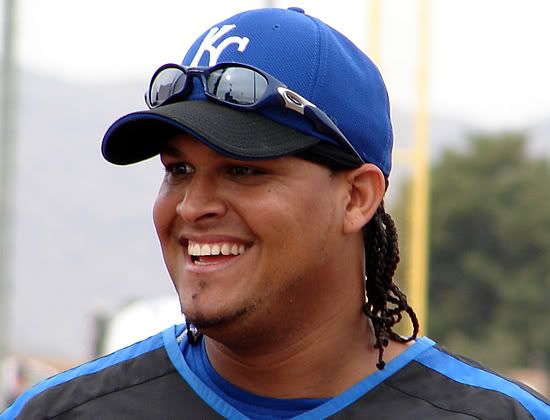
On Saturday, Ross Ohlendorf pitched an immaculate seventh inning against the Cardinals. You can watch it here. I'd have to defer to mehmattski on this, but I would bet that it's the first time that an Immaculate Inning has been throw where every strikeout was a dropped third strike.
On June 20th, AJ Burnett threw an immaculate inning of his own. You would think that a blog written by a Yankees fan and a Marlins fan who also follows Former Marlins, would've noticed when a Former Marlin throws an Immaculate Inning for the Yankees, against the Marlins. To our 6 readers and AJ Burnett, we wholeheartedly apologize for not posting about it when it happened.
Showing posts with label baseball. Show all posts
Showing posts with label baseball. Show all posts
Monday, September 07, 2009


Tuesday, August 05, 2008
Left-Handed Shortstops
The following is the final in my left-handed infielder series. Check out the details on left-handed second basemen and left-handed third basemen.
Both of my previous ventures into the world of left-handed infielding have yielded interesting results that had stories beyond the concept of a man whirling around to throw to first base. Such is not true of the Baseball-Reference play index revealing left-handed shortstops since 1956. That's because there are none. Sure, the search has three men listed; but a quick investigation shows that Mark Ryal, Tom Chism, and Royle Stillman never played the field in those games. Each time, the supposed lefty shorstop batted just once, in the top of the first inning, and was removed for a replacement in the bottom of the first inning.
Two of the three men were managed by Earl Weaver, known baseball innovator. Stillman was primarily a reserve outfielder, and a weak-hitting one at that. Why a career .213/.305/.329 hitter was picked to be one of the first three hitters of six games in 1975 is unclear. It did work though, Stillman got a hit in three of those six at bats. In his book "Weaver on Strategy," Weaver says:
Well, except that stubborn argument known as "small sample size." But, who am I to argue with Earl Weaver?
I also figured out a new way to search on baseball-reference.com: through the Batting Seasons Finder, I can pare down statistics for lefty shortstops. Here are the results. Clearly, it was a lot more common for left-handed throwers to play shortstop before the 20th century. Over in the "Pos" column, an asterisk notes a primary position. The most recent asterisk is for Russ Hall, who played 36 career games at shortstop in 1898 and 1901. Before Stillman, the most recent appearance of a left-hander at the shortstop position was Lou Gehrig in 1934. According to this article, Gehrig had suffered an attack of lumbago in the previous game and was inserted as the leadoff hitter (listed as shortstop), singled in one at bat, and was removed from the game to keep his streak alive.
So when was the last fielding chance by a left-handed shortstop? Hal Chase played one game at short in 1909 but had no fielding chances; he did have three put-outs in two games at short in his 1905 rookie season. Mike Donlin played until 1914 but his lefty short-stop days were over by 1902. The aptly named Lefty Davis played one game at short in 1903 (and one game at second in 1901), and everyone else on the list played prior to 1905. So it appears that Hal Chase, sometime in 1905, had the last fielding chance by a left-handed throwing shortstop. It was Donlin, in 1902, who was the last man to make a throw to first base left-handed.
Long-standing tradition is the most plausible explanation why. A google search reveals this article from the BBC, explaining that left-handed children can't play the infield (other than first base). Their reasoning- "it just doesn't happen." There's also some hand-waving about the inability of left-handed throwers to make the throw quickly enough. This I don't particularly understand. I'm right-handed myself, but in writing these I've imagined the movements necessary to play the positions left-handed. For shortstop, the distinction makes the least amount of sense. The only disadvantage I can think of is the ability to look back a runner on third before throwing to first base.
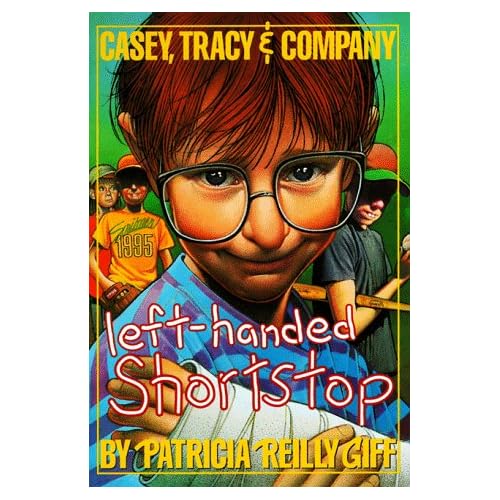
My internet investigation uncovered a few other interesting tidbits. First, there's a book called "Left-Handed Shortstop," apparently centered around a kid whose manager doesn't want to tell him that lefties can't play short. Also there was a college shortstop in softball a few years back who won the position in an open competition, despite being left-handed, and caused a sensation in the NAIA. Considering the shorter softball basepaths and quicker reaction times, I doubt that this player had the so-called problem of throwing to first-base quickly.
It's looking more and more that the bias against left-handed infielders is due to the vagaries of baseball tradition more than anything else. In addition, the notion in the article about left-handed catchers may be valid: if you're a kid and you're left-handed, chances are the manager is going to try you at pitcher. He might stick you in the outfield on non-pitching days, due to tradition, and the dearth of lefty infielders continues.
Both of my previous ventures into the world of left-handed infielding have yielded interesting results that had stories beyond the concept of a man whirling around to throw to first base. Such is not true of the Baseball-Reference play index revealing left-handed shortstops since 1956. That's because there are none. Sure, the search has three men listed; but a quick investigation shows that Mark Ryal, Tom Chism, and Royle Stillman never played the field in those games. Each time, the supposed lefty shorstop batted just once, in the top of the first inning, and was removed for a replacement in the bottom of the first inning.
Two of the three men were managed by Earl Weaver, known baseball innovator. Stillman was primarily a reserve outfielder, and a weak-hitting one at that. Why a career .213/.305/.329 hitter was picked to be one of the first three hitters of six games in 1975 is unclear. It did work though, Stillman got a hit in three of those six at bats. In his book "Weaver on Strategy," Weaver says:
"When my team was on the road, I would list someone else as our leadoff hitter and shortstop. Often it ws Royle Stillman, a young outfielder we had brought up from Rochester. Stillman would bat in the top of the first, and then Belanger would go in to play shortstop in the bottom of the inning.... I used this strategy only in September, when the roster swelled from twenty-five to forty and we had plenty of players available.... Usually Mark Belanger was the one who suffered. It hurt him to lose that at bat.... Mark was too upset to think what's best for the team. What the hell, Stillman went four for nine and got on base half the time. It's hard to argue with those results."
Well, except that stubborn argument known as "small sample size." But, who am I to argue with Earl Weaver?
I also figured out a new way to search on baseball-reference.com: through the Batting Seasons Finder, I can pare down statistics for lefty shortstops. Here are the results. Clearly, it was a lot more common for left-handed throwers to play shortstop before the 20th century. Over in the "Pos" column, an asterisk notes a primary position. The most recent asterisk is for Russ Hall, who played 36 career games at shortstop in 1898 and 1901. Before Stillman, the most recent appearance of a left-hander at the shortstop position was Lou Gehrig in 1934. According to this article, Gehrig had suffered an attack of lumbago in the previous game and was inserted as the leadoff hitter (listed as shortstop), singled in one at bat, and was removed from the game to keep his streak alive.
So when was the last fielding chance by a left-handed shortstop? Hal Chase played one game at short in 1909 but had no fielding chances; he did have three put-outs in two games at short in his 1905 rookie season. Mike Donlin played until 1914 but his lefty short-stop days were over by 1902. The aptly named Lefty Davis played one game at short in 1903 (and one game at second in 1901), and everyone else on the list played prior to 1905. So it appears that Hal Chase, sometime in 1905, had the last fielding chance by a left-handed throwing shortstop. It was Donlin, in 1902, who was the last man to make a throw to first base left-handed.
Long-standing tradition is the most plausible explanation why. A google search reveals this article from the BBC, explaining that left-handed children can't play the infield (other than first base). Their reasoning- "it just doesn't happen." There's also some hand-waving about the inability of left-handed throwers to make the throw quickly enough. This I don't particularly understand. I'm right-handed myself, but in writing these I've imagined the movements necessary to play the positions left-handed. For shortstop, the distinction makes the least amount of sense. The only disadvantage I can think of is the ability to look back a runner on third before throwing to first base.
My internet investigation uncovered a few other interesting tidbits. First, there's a book called "Left-Handed Shortstop," apparently centered around a kid whose manager doesn't want to tell him that lefties can't play short. Also there was a college shortstop in softball a few years back who won the position in an open competition, despite being left-handed, and caused a sensation in the NAIA. Considering the shorter softball basepaths and quicker reaction times, I doubt that this player had the so-called problem of throwing to first-base quickly.
It's looking more and more that the bias against left-handed infielders is due to the vagaries of baseball tradition more than anything else. In addition, the notion in the article about left-handed catchers may be valid: if you're a kid and you're left-handed, chances are the manager is going to try you at pitcher. He might stick you in the outfield on non-pitching days, due to tradition, and the dearth of lefty infielders continues.
Labels:
baseball,
left-handed,
shortstop

Saturday, August 02, 2008
Here Come the Marlins!
The Marlins lost last night along with the Phillies and the Mets which keeps the standings in place. As it is right now they're a game and a half behind the Phillies and a game behind the Mets.
Why will the Marlins win the NL East? The immediate reaction is to dismiss the question outright. They're the Marlins for crying out loud. Well, there's about 50 games left to go and they're absolutely in the thick of the race so dismissal isn't really valid. In a related note, saying that they don't have the "talent" to compete also doesn't apply at this point in the season. As of August 2nd, the Marlins are 6th in the league in Runs Scored and tied for first with the Phillies for home runs. They don't have the names, but they know how to hit. Uggla's recent slump is worrying though...
The pitching is whats been holding them back. Only the Rockies and the Pirates have given up more runs. The opening day starter this year was Mark Hendrickson with his career ERA+ of 88. Despite not making a huge move at the trade deadline the Marlins still drastically improved their bullpen, Marlin-style. Josh Johnson returned in early July from Tommy John surgery. In 2006, his last full season, he had an ERA+ of 139 in 157 innings pitched. Anibal Sanchez returned on July 31st. In his injury-shortened 2006 he had an ERA+ of 152 in 115 innings pitched. So, the Marlins get two theoretically above-average starters. This means they can move pitchers like Hendrickson to the bullpen, where they belong.
Next week is crucial as they have 3 games series against the Mets and the Phillies. At this point it's hard to see any team getting knocked out of it short of the Fish going 0-6, but it's hard to make up ground in the standings when you're behind two teams, so this is a golden opportunity to move up the board.
Why will the Marlins win the NL East? The immediate reaction is to dismiss the question outright. They're the Marlins for crying out loud. Well, there's about 50 games left to go and they're absolutely in the thick of the race so dismissal isn't really valid. In a related note, saying that they don't have the "talent" to compete also doesn't apply at this point in the season. As of August 2nd, the Marlins are 6th in the league in Runs Scored and tied for first with the Phillies for home runs. They don't have the names, but they know how to hit. Uggla's recent slump is worrying though...
The pitching is whats been holding them back. Only the Rockies and the Pirates have given up more runs. The opening day starter this year was Mark Hendrickson with his career ERA+ of 88. Despite not making a huge move at the trade deadline the Marlins still drastically improved their bullpen, Marlin-style. Josh Johnson returned in early July from Tommy John surgery. In 2006, his last full season, he had an ERA+ of 139 in 157 innings pitched. Anibal Sanchez returned on July 31st. In his injury-shortened 2006 he had an ERA+ of 152 in 115 innings pitched. So, the Marlins get two theoretically above-average starters. This means they can move pitchers like Hendrickson to the bullpen, where they belong.
Next week is crucial as they have 3 games series against the Mets and the Phillies. At this point it's hard to see any team getting knocked out of it short of the Fish going 0-6, but it's hard to make up ground in the standings when you're behind two teams, so this is a golden opportunity to move up the board.
Friday, August 01, 2008
Randy Johnson Trades: Revisited
 While future hall of famers were being whisked across the country in blockbuster trades yesterday, the Yankees made a minor move of minor leaguers that went largely unnoticed. In it, Brian Cashman sent AAA infielder Alberto Gonzalez (no, not that one) to the Washington Nationals organization in exchange for AA pitcher Jhonny Nunez. With this trade, three fourths of the haul from the 2006 Randy Johnson trade are now out of the organization. What follows is a look back at those deals and the impact on the players and the Yankees.
To begin, Randy Johnson was acquired in the fall of 2005 from the Arizona Diamondbacks. The Yankees were trying to recover from The Collapse of 2004, and it would be George Steinbrenner's final tyrranical off-season. In order to buy out Johnson's no-trade clause, the Yankees signed the 40-year old pitcher to a three year extension, which paid him $16 million. The money spent on RJ following this trade was later used by Cashman as a reason for not signing free agent Carlos Beltran, who went to the Mets for $13M/year. The trade losses:

Javier Vazquez: Aquired via trade in the previous offseason (for Nick Johnson and Juan Rivera), Vazquez pitched servicably for the Yankees during the regular season, leading the team in innings pitched and strikeouts. His ERA was below average (ERA+ of 92) but he was a workhorse in an otherwise aging rotation. It was the post-season that punched his ticket out of town, including this game, which I am pretty sure never happened or will be spoken of again. Since the trade, Vazquez has had a couple league average seasons- one with the Diamondbacks and one with the White Sox, in addition to a good 2007 season. It's possible that New York was just too much for Vazquez, but his loss isn't too great.
Dioneer Navarro: It was his addition in the trade that most angered me at the time. While the Yankees' farm system has beefed up nicely in recent years, the prospects at catcher remain far away from the majors (especially when they get decked in spring training). In the meantime the Yankees played with fire, no one even approaching respectable to replace Jorge Posada in the event of injury. Well, this season the fire finally burnt, and the Yankees had to make a big trade to fill the void. If, instead, they'd held onto Navarro, they could be enjoying the kind of production he's currently giving the first place Rays: .313/.370/.421 and an All-Star appearance.
Brad Halsey: For a while it looked as though Halsey might stick as a major leaguer- he was, after all, left-handed. But Halsey struggled for the Diamondbacks and A's, and his only claim to fame was giving up Barry Bonds' 714th home run.
Randy Johnson's two seasons in the Bronx were mixed; in 2005 he pitched well, 225 strong innings with an ERA+ of 112, and a solid strikeout ratio. But in 2006, RJ fell apart, ERA+ was 90, the strikeout rate dropped and so did his effectiveness. After a terrible ALDS against Detroit, Johnson was looking for a way out. Brian Cashman granted his wish on January 11, 2007, almost exactly two years from his previous trade. The haul:

Luis Vizcaino: The Viz would join the Yankees as his fourth team in as many years, but he had really kicked up his strikeouts (72 in 65 IP) as the Diamondbacks' set up man. The Yankees had him take charge of the seventh inning and he pitched okay- but with far too many walks. He had two of them, along with two hits, in just 2/3 of an inning in the 2007 ALDS, and his return was never likely. Vizcaino was offered arbitration following the 2007 seaosn but declined, netting a suppelementary round draft pick for the Yankees in the 2008 June Amateur Draft.
Alberto Gonzalez- The impetus for this piece, the man the blogs nicknamed The Attorney General (although it may be spelled differently: baseball-reference has him one way, milb.com another). A slick fielding, average-hitting shortsop, Gonzalez looked to be the kind of player the Yankees were looking for to replace the Miguel Cairos of the world- someone who could actually field multiple positions and not look totally lost at the plate. Unfortuanately, Gonzalez never developed much, with an OPS below .700 in both seasons in baby pinstripes. He was also awful at the plate in two major league callups, but never had much of a shot, not with The Captain in front of him.
Ross Ohlendorf- The former Princeton student struggled as a starter in his first season in the Yankees' organization, and the team made the decision to convert him to a reliever. Initially it worked out well, and Ohlendorf finished the season with important innings in the big leagues. But despite picking up a few mph on his fastball, Ohlendorf could not consistently get men out in the majors, and had been demoted prior to the Nady/Marte trade. He was starting again in Scranton; one rumor had him being re-converted to a starter, while another rumor was he was trying to learn a splitter. Either way, he's out of the organization as well.
Steven Jackson- Coming off a great season in AA (in the Arizona organization), Jackson had high promise coming to the Yankees. However, he struggled at both AA Trenton and AAA Scranton, and has bounced between the levels again this year. As a 26 year old, he's not much of a prospect any longer. While he's the last remaining direct evidence of the trade, he will probably not amout to much at the big league level, if any.

Finally, we have the aftermath in 2008. First of all, the Yankees used their supplemental draft pick on Jeremy Bleich, of Stanford University. Despite some injuries and seemingly sub-par statistics, Yankees fans and blogs have grown on Bleich, especially after this vote of confidence from Baseball America's John Manuel (though I'm not really sure what "But he's a guy." means...) Next we have the big trade, Ohlendorf and others (frontlined by 19-year old prospect Jose Tabata) sent to the Pirates for Xavier Nady and Damaso Marte. From the reports of the trade, Ohlendorf was the other key guy, and the Pirates chose from a list of minor leaguers for the other two spots. Still, despite a mediocre performance in the big-league pen, Ohlendorf had enough value to improve the Yankees for 2008 and beyond.
This brings us back to the final trade: Gonzalez for Nunez. While I established above that Gonzalez didn't bring much to the table for the Yankees, he's still by far the most major-league ready infielder the Yankees have; in the event of an injury to Jeter or Cano, the Yankees will struggle to put someone who can at least field the position adequately. Nunez, meanwhile, is a bit of a mystery. He's 22 years old and doing well at AA, so he still has a prospect status, and is apparently a fastball-slider type pitcher. But no more is known about him.
So, what to make of the trades? I still think that the first RJ trade was one of the worst "Steinbrenner moves," and with Cashman in control the Yankees would have been a better team in 2005 and 2006. Still, the trade haul for him has given the Yankees useful players both this year and, as a result of subsequent trades, next year.
Labels:
baseball,
Randy Johnson,
trades,
Yankees
Thursday, July 31, 2008
Walk Off Strikeout
The walk-off home run is one of the most spectacular plays baseball can offer. There are plenty of ways to end a game, of course. There's a blog dedicated to one of them- the walk-off walk. That's got to be pretty embarrassing for the pitcher. For the catcher, an even more embarrassing event has to be the walkoff strikeout- there, the pitcher has just dominated a hitter to get the strikeout.... but wait! The ball is bouncing around the backstop! The game-winning run scores!
How often does this kind of humiliation occur? Well, it just happened in a minor league game-- the Toledo Mud Hens beat the Pawktucket Red Sox 5-4 after Timo Perez swung at a ball in the dirt, and Freddy Guzman raced home with the winning run. In the major leagues, however, the event is somewhat rare. Unfortunately the Play Index won't let me run the search all at once; I had to check each year in the database individually. The results, in reverse chronological order:
August 3, 2005- With the game tied, a runner on third, and one out in the bottom of the ninth, Lou Pinella instructed Cubs pitcher Mike Remlinger to intentionally walk both Chase Utley and Bobby Abreu to load the bases. That brought up Pat Burrell, and Remlinger was replaced by Michael Wuertz- because apparently, going to the closer in a tie game on the road is ill-advised. Anyway, Burrell swung feebly at the first two pitches, and then Weurtz wasted a couple, including one in the dirt. On the 2-2 pitch, Weurtz got Burrell swinging, but the pitch got away from catcher Michael Barrett. According to this recap, Barrett panicked and threw to third rather than chasing down Jimmy Rollins, who was halfway between third and home. Rollins scored easily with the winning run. Barrett later claimed that umpire Dana DeMuth "did us a favor really by calling him out. If I had just eaten the throw and run at him, it would've been a different ballgame. I can't blame [DeMuth]. The place is so loud. I was expecting a foul tip call and didn't get it." Barrett was not alone in making a mental mistake in the game, but his was the most costly.
September 27, 2003- Late in the season, in front of a paltry crowd of 14,277, the worst team in over 40 years avoided tying the modern baseball single-season record for losses in a season by beating the Twins on a walk-off strikeout. The Detroit Tigers had rallied to tie from down 8-1 with a three-run seventh and a four-run eighth, but still needed a lot of help. With one out, Alex Sanchez drew a walk. With William Morris batting, Sanchez went to work- stealing both second and third base. This ESPN recap says that the 2-2 pitch went to the backstop, while Morris swung and missed. Sanchez scored easily, preventing the Tigers from losing their 120th game, which would have matched the 1962 Mets for most losses since 1900. Like Michael Barrett in the game above, Sanchez "thought it was a foul ball, but everyone in the dugout was yelling for me to go, so I took off. As soon as I started running, I knew we were going to win the game. That's when I put my arms in the air."
September 22, 1997- Walk-off strikeouts are not reserved only for poor teams; this time it was the 101-win Atlanta Braves who stunned the Expos in the eleventh inning. It had been seven innings since a run had crossed the plate, when Expos pitcher Shayne Bennett got into trouble-- a single, sacrifice bunt, and intentional walk gave runners on first and second with one out. Unfortunately, Bennett walked the next hitter, Greg Colbrunn, which brought up Mike Mordecai. Steve Kline was called from the bullpen, and quickly got to an 0-2 count. After wasting a pitch, Kline got Mordecai to swing on the next pitch, which was wild and Denny Bautist scored from third with the winning run.
June 16, 1986- The largest gap between walk-off strikeouts so far, more than ten years back to this game between the Rangers and Angels. With California trailing 1-0 in the ninth inning, Texas starter Charlie Hough was still going strong. The knuckleballer got pinch hitter Rupert Jones to strike out looking, and then another pinch hitter, Jack Howell, hit a line drive to left field. George Wright, who had entered the game in the ninth, presumably as a defensive replacement, botched the catch, which went for a three-base error. Wally Joyner singled in Howell, and advanced to second on a passed ball. After a strikeout and an intentional walk (of Reggie Jackson), it brought up George Hendrick. Hough is credited with a strikeout of Hendrick, which should have ended the game. But catcher Orlando Mercado is credited with a passed ball, and Joyner scored all the way from second. Mercado was generally a solid catcher, with only sixteen passed balls in his 247 career games, but six of them came in 1986-- his only season catching Charlie Hough. So perhaps we shouldn't heap too much blame on Mercado for this one; he probably wanted to wait for it to stop and pick it up. Still, this is the first of the games I've looked at where the walk-off strikeout should have been the third out; it also is the first game I've seen where the winning run scored from second.
August 15, 1970- Sixteen years, back to a classing pitching matchup between the Mets' Tom Seaver and the Braves' Phil Neikro. Seaver was still pitching in the ninth inning, his team up 2-1. Unfortunately for Seaver, it all began to fall apart-- a single (Tony Gonzalez), flyball, and infield single (Rico Carty) brought up pinch hitter Hank Aaron. The famous slugger drew a walk to load the bases for Bob Tillman. Seaver managed to get Tillman to strikeout for the third time in the game, but the pitch was wild. So wild, in fact, that it ended the game. The first run is charged to Seaver's wild pitch, but Rico Carty scored on an error by catcher Jerry Grote. So this game is interesting because the tying and winning runs scored on the strikeout, but it was an error that was ultimately responsible for the end of the game.
And that's all for the play index. Fifty-two years, and in just five games has there been a walk-off strikeout. We've seen it happen to good teams and some of the worst teams, good pitchers and bad. It probably won't make it into the memoirs of anyone involved, but their feats are stored here for all posterity.
How often does this kind of humiliation occur? Well, it just happened in a minor league game-- the Toledo Mud Hens beat the Pawktucket Red Sox 5-4 after Timo Perez swung at a ball in the dirt, and Freddy Guzman raced home with the winning run. In the major leagues, however, the event is somewhat rare. Unfortunately the Play Index won't let me run the search all at once; I had to check each year in the database individually. The results, in reverse chronological order:
August 3, 2005- With the game tied, a runner on third, and one out in the bottom of the ninth, Lou Pinella instructed Cubs pitcher Mike Remlinger to intentionally walk both Chase Utley and Bobby Abreu to load the bases. That brought up Pat Burrell, and Remlinger was replaced by Michael Wuertz- because apparently, going to the closer in a tie game on the road is ill-advised. Anyway, Burrell swung feebly at the first two pitches, and then Weurtz wasted a couple, including one in the dirt. On the 2-2 pitch, Weurtz got Burrell swinging, but the pitch got away from catcher Michael Barrett. According to this recap, Barrett panicked and threw to third rather than chasing down Jimmy Rollins, who was halfway between third and home. Rollins scored easily with the winning run. Barrett later claimed that umpire Dana DeMuth "did us a favor really by calling him out. If I had just eaten the throw and run at him, it would've been a different ballgame. I can't blame [DeMuth]. The place is so loud. I was expecting a foul tip call and didn't get it." Barrett was not alone in making a mental mistake in the game, but his was the most costly.
September 27, 2003- Late in the season, in front of a paltry crowd of 14,277, the worst team in over 40 years avoided tying the modern baseball single-season record for losses in a season by beating the Twins on a walk-off strikeout. The Detroit Tigers had rallied to tie from down 8-1 with a three-run seventh and a four-run eighth, but still needed a lot of help. With one out, Alex Sanchez drew a walk. With William Morris batting, Sanchez went to work- stealing both second and third base. This ESPN recap says that the 2-2 pitch went to the backstop, while Morris swung and missed. Sanchez scored easily, preventing the Tigers from losing their 120th game, which would have matched the 1962 Mets for most losses since 1900. Like Michael Barrett in the game above, Sanchez "thought it was a foul ball, but everyone in the dugout was yelling for me to go, so I took off. As soon as I started running, I knew we were going to win the game. That's when I put my arms in the air."
September 22, 1997- Walk-off strikeouts are not reserved only for poor teams; this time it was the 101-win Atlanta Braves who stunned the Expos in the eleventh inning. It had been seven innings since a run had crossed the plate, when Expos pitcher Shayne Bennett got into trouble-- a single, sacrifice bunt, and intentional walk gave runners on first and second with one out. Unfortunately, Bennett walked the next hitter, Greg Colbrunn, which brought up Mike Mordecai. Steve Kline was called from the bullpen, and quickly got to an 0-2 count. After wasting a pitch, Kline got Mordecai to swing on the next pitch, which was wild and Denny Bautist scored from third with the winning run.
June 16, 1986- The largest gap between walk-off strikeouts so far, more than ten years back to this game between the Rangers and Angels. With California trailing 1-0 in the ninth inning, Texas starter Charlie Hough was still going strong. The knuckleballer got pinch hitter Rupert Jones to strike out looking, and then another pinch hitter, Jack Howell, hit a line drive to left field. George Wright, who had entered the game in the ninth, presumably as a defensive replacement, botched the catch, which went for a three-base error. Wally Joyner singled in Howell, and advanced to second on a passed ball. After a strikeout and an intentional walk (of Reggie Jackson), it brought up George Hendrick. Hough is credited with a strikeout of Hendrick, which should have ended the game. But catcher Orlando Mercado is credited with a passed ball, and Joyner scored all the way from second. Mercado was generally a solid catcher, with only sixteen passed balls in his 247 career games, but six of them came in 1986-- his only season catching Charlie Hough. So perhaps we shouldn't heap too much blame on Mercado for this one; he probably wanted to wait for it to stop and pick it up. Still, this is the first of the games I've looked at where the walk-off strikeout should have been the third out; it also is the first game I've seen where the winning run scored from second.
August 15, 1970- Sixteen years, back to a classing pitching matchup between the Mets' Tom Seaver and the Braves' Phil Neikro. Seaver was still pitching in the ninth inning, his team up 2-1. Unfortunately for Seaver, it all began to fall apart-- a single (Tony Gonzalez), flyball, and infield single (Rico Carty) brought up pinch hitter Hank Aaron. The famous slugger drew a walk to load the bases for Bob Tillman. Seaver managed to get Tillman to strikeout for the third time in the game, but the pitch was wild. So wild, in fact, that it ended the game. The first run is charged to Seaver's wild pitch, but Rico Carty scored on an error by catcher Jerry Grote. So this game is interesting because the tying and winning runs scored on the strikeout, but it was an error that was ultimately responsible for the end of the game.
And that's all for the play index. Fifty-two years, and in just five games has there been a walk-off strikeout. We've seen it happen to good teams and some of the worst teams, good pitchers and bad. It probably won't make it into the memoirs of anyone involved, but their feats are stored here for all posterity.
Labels:
baseball,
Play Index,
Rare Events
Sunday, July 27, 2008
Pitcher as Fielder
In response to Matt's post about near-Perfect games, jl25and3 wrote
"I'll disagree with you on Dick Bosman. The pitcher-as-fielder is considered separately from the pitcher-as-pitcher, and that's the way it should be. You're judging his pitching performance, and his fielding isn't relevant.
Think of it this way: if a batter reaches on a pitcher's error, would you count that in the pitcher's DIPS? Of course not, because it had nothing to do with his pitching.
Once the ball is hit to him, he's no longer a pitcher. He's just another infielder. That infielder's bad play shouldn't affect any evaluation of the pitcher's performance."
I started to write a response but then figured it deserved it's own post. I disagree strongly with jl. The purpose of the pitcher is to prevent the other team from scoring runs. It is extremely arbitrary to say his job as a pitcher ends as soon as the ball leaves his hand.
If a pitcher is a complete liability on defense then he cannot be a successful pitcher. A pitcher who can pitch well but cannot field his position isn't any more useful to his team than a pitcher who can't pitch well. I'd argue that batters who get on base due to errors by the pitcher should count as earned runs if they come around to score and should count toward a pitcher's WHIP(more reasonable to make a new stat called WHEPIR Walks + Hits + Errors by Pitcher / Innings Pitched).
Let's consider 3 possible results from a 3-2 count.
1) The pitcher misses the zone and the batter walks.
2) The pitcher leaves the ball up and the batter gets a single.
3) The pitcher makes a decent pitch and the batter hits a dribbler to the mound. The pitcher misplays it and the batter gets to first.
Scenarios 1 and 2 are considered the pitcher's fault as a Pitcher. In scenario 3 it's considered the pitcher's fault as a Fielder. In all three the batter is on first due only to the actions of the pitcher. I don't see the purpose of separating pitcher's pitching statistics and pitcher's fielding statistics outside of a thought experiment. The pitcher's job before he pitches is to prevent runs and the pitcher's job after the ball leaves his hand is to prevent runs. The player who throws the ball to the catcher and the player who fields the 1 position are one in the same so why should stats treat them as different people?
"I'll disagree with you on Dick Bosman. The pitcher-as-fielder is considered separately from the pitcher-as-pitcher, and that's the way it should be. You're judging his pitching performance, and his fielding isn't relevant.
Think of it this way: if a batter reaches on a pitcher's error, would you count that in the pitcher's DIPS? Of course not, because it had nothing to do with his pitching.
Once the ball is hit to him, he's no longer a pitcher. He's just another infielder. That infielder's bad play shouldn't affect any evaluation of the pitcher's performance."
I started to write a response but then figured it deserved it's own post. I disagree strongly with jl. The purpose of the pitcher is to prevent the other team from scoring runs. It is extremely arbitrary to say his job as a pitcher ends as soon as the ball leaves his hand.
If a pitcher is a complete liability on defense then he cannot be a successful pitcher. A pitcher who can pitch well but cannot field his position isn't any more useful to his team than a pitcher who can't pitch well. I'd argue that batters who get on base due to errors by the pitcher should count as earned runs if they come around to score and should count toward a pitcher's WHIP(more reasonable to make a new stat called WHEPIR Walks + Hits + Errors by Pitcher / Innings Pitched).
Let's consider 3 possible results from a 3-2 count.
1) The pitcher misses the zone and the batter walks.
2) The pitcher leaves the ball up and the batter gets a single.
3) The pitcher makes a decent pitch and the batter hits a dribbler to the mound. The pitcher misplays it and the batter gets to first.
Scenarios 1 and 2 are considered the pitcher's fault as a Pitcher. In scenario 3 it's considered the pitcher's fault as a Fielder. In all three the batter is on first due only to the actions of the pitcher. I don't see the purpose of separating pitcher's pitching statistics and pitcher's fielding statistics outside of a thought experiment. The pitcher's job before he pitches is to prevent runs and the pitcher's job after the ball leaves his hand is to prevent runs. The player who throws the ball to the catcher and the player who fields the 1 position are one in the same so why should stats treat them as different people?
Labels:
baseball,
Baseball Statistics
Thursday, July 24, 2008
Johnette Howard is wrong
http://www.newsday.com/sports/baseball/ny-sphow235773988jul23,0,3392980.column
Ok, we're not Fire Joe Morgan(nor do we write for The Office), but this is two days in a row where intense disagreement has driven me to write. Johnette slams Johan Santana for not demanding to be kept in the game after pitching 8 strong innings. At the end of 8 the Mets had a 6-2 lead over the Phillies. Billy Wagner wasn't available to pitch, but it wasn't even a Save situation. The Mets had the entire rest of the bullpen available for the purpose of recording 3 outs before the Mets scored 4 or more runs. I don't care what inning it is, a Major League Pitcher should not give up 4 runs in an inning. If you can't trust your bullpen to hold that lead then why do you have a bullpen?
If they only gave up 3 runs then nobody questions Santana's desire to win. If they left Santana in and he gives up 4 runs, Jerry Manuel gets roasted for leaving him in too long(see Little, Grady). If they leave him in for the 9th but he strains his elbow while throwing the last pitch, then Manuel gets slammed(and rightfully so) for overworking his pitcher for a game in July.
He had thrown 105 pitches after 8 innings, and whether you agree with it or not, 100 pitches is rule of thumb for pulling a pitcher. This isn't the playoffs where there's no tomorrow, there are 61 regular season games left, and Santana will probably pitch in about 12 of them. The NL East is a 3-way battle and it's not worth jeopardizing the 80 or so innings that a healthy Santana would pitch for one inning when you have a 4 run lead.
Ok, we're not Fire Joe Morgan(nor do we write for The Office), but this is two days in a row where intense disagreement has driven me to write. Johnette slams Johan Santana for not demanding to be kept in the game after pitching 8 strong innings. At the end of 8 the Mets had a 6-2 lead over the Phillies. Billy Wagner wasn't available to pitch, but it wasn't even a Save situation. The Mets had the entire rest of the bullpen available for the purpose of recording 3 outs before the Mets scored 4 or more runs. I don't care what inning it is, a Major League Pitcher should not give up 4 runs in an inning. If you can't trust your bullpen to hold that lead then why do you have a bullpen?
If they only gave up 3 runs then nobody questions Santana's desire to win. If they left Santana in and he gives up 4 runs, Jerry Manuel gets roasted for leaving him in too long(see Little, Grady). If they leave him in for the 9th but he strains his elbow while throwing the last pitch, then Manuel gets slammed(and rightfully so) for overworking his pitcher for a game in July.
He had thrown 105 pitches after 8 innings, and whether you agree with it or not, 100 pitches is rule of thumb for pulling a pitcher. This isn't the playoffs where there's no tomorrow, there are 61 regular season games left, and Santana will probably pitch in about 12 of them. The NL East is a 3-way battle and it's not worth jeopardizing the 80 or so innings that a healthy Santana would pitch for one inning when you have a 4 run lead.
Labels:
baseball
Tuesday, October 02, 2007
Former Marlin-based Playoff Predictions
The concept of Former Marlin Power was born after the 1997 post-World Series fire sale that was instigated by Wayne Huizenga for the purpose of slashing payroll and making the team easier to eventually sell. Several good players were on this team and in the following seasons many of them went on to put up impressive numbers. As a fan it was sickening to watch players such as Moises Alou and Gary Sheffield go on to have great success elsewhere while we were stuck holding the fractured pieces of a once great team. Players such as Craig Counsell later went on to help other teams win World Series. Former Marlins became a stable fixture on any successful team.
In last night's one game playoff, it only appeared that putting in Julio Jorge, Former Marlin, was a terrible idea. In reality, the Rockies were pressing their Former Marlin(FM) advantage. The only FM the Padres had was Trevor Hoffman, while the Rockies had already played FM Matt Herges. Trevor Hoffman's Former Marlins Power wasn't enough to overcome the FM power of Herges and Julio, so the Padres fell to the Rockies.
Before I break down the week 1 games, lets go through some scientifically calculated measurements.
Any player who has been on the field as a Marlin for a single play has at least a FM power of 1. This covers everyone from Mike Piazza to Kevin Millar.
Any FM who played in the post-season for a World Series winning team gets a 50% bonus to their FM power, 75% if they were the World Series MVP.
Players who have been former Marlins twice also get a 50% bonus.
Players who were Original Marlins get a 50% bonus. I believe that's just Conine and Hoffman at this point.
Angels versus the Red Sox
Angels FM Power: 1
Darren Oliver 1 (2004 2-3 6.44 ERA)
Red Sox FM Power: 3.25
Josh Beckett 1.75 (2003 WS MVP)
Mike Lowell 1.5 (2003 WS)
As you can see, the Angels don't have much of a chance. Note that although the Sox only have 2 Former Marlins, they get the most out of what they have. If things look dicey though, they're going to really miss Alex Gonzales.
Yankees versus Indians
Yankee FM Power: 1
Ron Villone 1 (2005 3-2 6.85 ERA)
Indians FM Power: 1
Joe Borowski 1 (2006 36 Saves)
This should be a very good series with the FM Power tied. I'm calling the Yankees due to unofficial extra Marlin power from having Carl Pavano on their DL as well as having Al Leiter on the payroll as a broadcaster on YES. Neither go toward the official count, but Pavano gets the WS bonus from 2003 and Leiter is both a 2-time FM and gets the WS bonus from 1997. With FM power this tight, any advantage can tip it. Also of note, this is the We Hate the Marlins Series. The Indians lost to the Marlins in the 1997 World Series and the Yankees were the victims in 2003.
Rockies versus Phillies
Rockies FM power: 2
Matt Herges 1 (2006 2-3 4.31 ERA)
Jorge Julio 1 (2007 0-2 12.54 ERA) (the fact that he has a job is proof that I'm not the only one who believes in FM power)
Phillies FM power: 3.25
Antonio Alfonseca 2.25 (1997 WS, 2-time Marlin)
Wes Helms 1 (2006)
Cubs versus Diamondbacks
Cubs FM Power: 4
Ryan Dempster 1
Derrek Lee 1.5 (2003 WS)
Cliff Floyd 1.5 (1997 WS)
Diamondbacks FM Power: 1.75
Livan Hernandez 1.75 (1997 WS MVP)
Cubs take this one in a sweep.
In last night's one game playoff, it only appeared that putting in Julio Jorge, Former Marlin, was a terrible idea. In reality, the Rockies were pressing their Former Marlin(FM) advantage. The only FM the Padres had was Trevor Hoffman, while the Rockies had already played FM Matt Herges. Trevor Hoffman's Former Marlins Power wasn't enough to overcome the FM power of Herges and Julio, so the Padres fell to the Rockies.
Before I break down the week 1 games, lets go through some scientifically calculated measurements.
Any player who has been on the field as a Marlin for a single play has at least a FM power of 1. This covers everyone from Mike Piazza to Kevin Millar.
Any FM who played in the post-season for a World Series winning team gets a 50% bonus to their FM power, 75% if they were the World Series MVP.
Players who have been former Marlins twice also get a 50% bonus.
Players who were Original Marlins get a 50% bonus. I believe that's just Conine and Hoffman at this point.
Angels versus the Red Sox
Angels FM Power: 1
Darren Oliver 1 (2004 2-3 6.44 ERA)
Red Sox FM Power: 3.25
Josh Beckett 1.75 (2003 WS MVP)
Mike Lowell 1.5 (2003 WS)
As you can see, the Angels don't have much of a chance. Note that although the Sox only have 2 Former Marlins, they get the most out of what they have. If things look dicey though, they're going to really miss Alex Gonzales.
Yankees versus Indians
Yankee FM Power: 1
Ron Villone 1 (2005 3-2 6.85 ERA)
Indians FM Power: 1
Joe Borowski 1 (2006 36 Saves)
This should be a very good series with the FM Power tied. I'm calling the Yankees due to unofficial extra Marlin power from having Carl Pavano on their DL as well as having Al Leiter on the payroll as a broadcaster on YES. Neither go toward the official count, but Pavano gets the WS bonus from 2003 and Leiter is both a 2-time FM and gets the WS bonus from 1997. With FM power this tight, any advantage can tip it. Also of note, this is the We Hate the Marlins Series. The Indians lost to the Marlins in the 1997 World Series and the Yankees were the victims in 2003.
Rockies versus Phillies
Rockies FM power: 2
Matt Herges 1 (2006 2-3 4.31 ERA)
Jorge Julio 1 (2007 0-2 12.54 ERA) (the fact that he has a job is proof that I'm not the only one who believes in FM power)
Phillies FM power: 3.25
Antonio Alfonseca 2.25 (1997 WS, 2-time Marlin)
Wes Helms 1 (2006)
Cubs versus Diamondbacks
Cubs FM Power: 4
Ryan Dempster 1
Derrek Lee 1.5 (2003 WS)
Cliff Floyd 1.5 (1997 WS)
Diamondbacks FM Power: 1.75
Livan Hernandez 1.75 (1997 WS MVP)
Cubs take this one in a sweep.
Labels:
2007 mlb playoffs,
baseball,
FMP,
marlins
Tuesday, August 21, 2007
Jeff Conine, Met for now, Marlin forever
Jeff Conine was traded to the Marlins' NL-East rival the Mets the other day. With all the former Marlins there it is in Conine's own words, "the Marlins North." Fish Chunks spells the situation out pretty well. I've always been a big believer in Former Marlin Power, and apparently the Mets are too.
It is always sad to see Conine go to a non-Marlin team, because he is the closest thing the Marlins have to an iconic player. He started in the Marlins very first game against the Dodgers and went 4-4 in the win, earning the title Mr. Marlin. (also note that future Former Marlin Mike Piazza was playing for the Dodgers).
He played Left Field when Al Leiter threw the first No Hitter in Marlins' history.
He played First Base when Kevin Brown threw his No Hitter.
He was a member of the 1997 Florida Marlins, the first Wild Card team to ever win the World Series.
During the Marlins 2003 season, they randomly had Jeff Conine bobblehead night...even though he wasn't actually on the team yet. When Mike Lowell got hurt though during the playoff chase, the Marlins ownership manned up and got Conine to help the team out (also, they called up a couple guys named Dontrelle Willis and Miguel Cabrera).
Although his regular season numbers with the Marlins that season aren't particularly great, he had some huge hits against the Phillies which helped the Fish beat them out for the Wild Card spot. At the time, it seemed like he was single-handedly taking a bat to their playoff hopes. In the playoffs he hit .267 in the NLDS, .458 in the NLCS, and .333 in the World Series.
In the Marlins untarnished playoff series record, he's appeared in all but one game(Game 4 of the 1997 WS). For a team like the Marlins where you're forced to watch your team get taken apart over and over again, he is the closest thing to consistency.
It is always sad to see Conine go to a non-Marlin team, because he is the closest thing the Marlins have to an iconic player. He started in the Marlins very first game against the Dodgers and went 4-4 in the win, earning the title Mr. Marlin. (also note that future Former Marlin Mike Piazza was playing for the Dodgers).
He played Left Field when Al Leiter threw the first No Hitter in Marlins' history.
He played First Base when Kevin Brown threw his No Hitter.
He was a member of the 1997 Florida Marlins, the first Wild Card team to ever win the World Series.
During the Marlins 2003 season, they randomly had Jeff Conine bobblehead night...even though he wasn't actually on the team yet. When Mike Lowell got hurt though during the playoff chase, the Marlins ownership manned up and got Conine to help the team out (also, they called up a couple guys named Dontrelle Willis and Miguel Cabrera).
Although his regular season numbers with the Marlins that season aren't particularly great, he had some huge hits against the Phillies which helped the Fish beat them out for the Wild Card spot. At the time, it seemed like he was single-handedly taking a bat to their playoff hopes. In the playoffs he hit .267 in the NLDS, .458 in the NLCS, and .333 in the World Series.
In the Marlins untarnished playoff series record, he's appeared in all but one game(Game 4 of the 1997 WS). For a team like the Marlins where you're forced to watch your team get taken apart over and over again, he is the closest thing to consistency.
Labels:
baseball
Wednesday, August 08, 2007
Glavine: Not Shot After All
In the summer of 2003, I had my experience in an Office Space type job, making copies and filing mail 8 hours a day and a 1 hour commute each way. Not knowing anyone else in the company, I usually ate lunch in my car, listening to Mike and the Mad Dog on WFAN. In the days before the explosion of blogs and other internet commentary, this was the pinnacle of interactive New York sports. Their call-in show was one of the firsts of its kind, and balanced the calm bass voice of Mike Francessa with the crazy, octave-too-high hot-head of Chris "Mad Dog" Russo. This was not always the case, particularly during the summer when one or the other would go on vacation, leaving his partner with four hours a day to fill.
July 20, 2003 was one of those days. The previous day, Mets' starter Tom Glavine threw a stinker against the division leading Braves- he went just 4.1 innings, giving up 7 earned runs on 9 hits. The loss dropped the Mets to fifth place, 24 games behind the Braves. Russo, on his own with Francessa on vacation, decided to make it the "Bash Tom Glavine Show."
It went on and on like that until the end of my lunch break. Three hours later, as I drove home, Russo was still going strong with the Glavine bashing.
Tom, however, was not fazed. He went 3-1 with a 1.95 ERA in August of 2003, and finished the season having dropped his ERA to 4.52. He followed this with the following seasons:
2004: 119 ERA+
2005: 118 ERA+
2006: 113 ERA+
While Glavine has been pretty average (96 ERA+) in 2007, he's now 41 years old and certainly nearing the end of his career. And on Sunday, Glavine joined a pretty exclusive group and won his 300th career game. While we at Immaculate Inning realize the relative unimportance of wins as a measurement of a pitchers' worth, we also realize that this is a milestone to be proud of, especially when blowhards like Russo are proved wrong. So have a cookie, Tom, a Publix cookie.

One final note, about 300 wins- lots of announcers have been pontificating again, much as with the "cheapened" 500 HR plateau. They say that 300 wins will never be touched again, as Randy Johnson (284 wins) is old and Mike Mussina (246 wins) is just too far away. They say that with the rise of relief specialists and the five-man rotation, that no one will make it again. Yet Glavine (and Johnson, and Roger Clemens, and Greg Maddux) pitched their entire careers in an era where the 5-man rotation was dominant. Glavine and Maddux may have been aided by a few years with the braves when they, John Smoltz, and Denny Neagle had a de facto 4-man rotation. However, with the many young pitchers entering the game in their early 20s, is it so hard to imagine that someone could put up 15 wins for 20 seasons? Or even 18 wins for 17 seasons?
So it's interesting to me that, for some reason, the mainstream media sees five 500 HR hitters in four years and calls the plateau "cheapened." But three hurlers passing 300 wins in the same period means that it will never happen again? God forbid we use the passing of milestones to celebrate the careers of those who pass them. No, we should discuss existential properties of the milestones, instead. In other news, I am proud to have not listened to Mike and the Mad Dog since I left the NYC area.
July 20, 2003 was one of those days. The previous day, Mets' starter Tom Glavine threw a stinker against the division leading Braves- he went just 4.1 innings, giving up 7 earned runs on 9 hits. The loss dropped the Mets to fifth place, 24 games behind the Braves. Russo, on his own with Francessa on vacation, decided to make it the "Bash Tom Glavine Show."
"Glavine is shot! He's 37, he's 6 and 10, he's got a 5.10 ERA-- he's just shot! The Mets are going nowhere until they get rid of him! He's shot!"
It went on and on like that until the end of my lunch break. Three hours later, as I drove home, Russo was still going strong with the Glavine bashing.
Tom, however, was not fazed. He went 3-1 with a 1.95 ERA in August of 2003, and finished the season having dropped his ERA to 4.52. He followed this with the following seasons:
2004: 119 ERA+
2005: 118 ERA+
2006: 113 ERA+
While Glavine has been pretty average (96 ERA+) in 2007, he's now 41 years old and certainly nearing the end of his career. And on Sunday, Glavine joined a pretty exclusive group and won his 300th career game. While we at Immaculate Inning realize the relative unimportance of wins as a measurement of a pitchers' worth, we also realize that this is a milestone to be proud of, especially when blowhards like Russo are proved wrong. So have a cookie, Tom, a Publix cookie.
One final note, about 300 wins- lots of announcers have been pontificating again, much as with the "cheapened" 500 HR plateau. They say that 300 wins will never be touched again, as Randy Johnson (284 wins) is old and Mike Mussina (246 wins) is just too far away. They say that with the rise of relief specialists and the five-man rotation, that no one will make it again. Yet Glavine (and Johnson, and Roger Clemens, and Greg Maddux) pitched their entire careers in an era where the 5-man rotation was dominant. Glavine and Maddux may have been aided by a few years with the braves when they, John Smoltz, and Denny Neagle had a de facto 4-man rotation. However, with the many young pitchers entering the game in their early 20s, is it so hard to imagine that someone could put up 15 wins for 20 seasons? Or even 18 wins for 17 seasons?
So it's interesting to me that, for some reason, the mainstream media sees five 500 HR hitters in four years and calls the plateau "cheapened." But three hurlers passing 300 wins in the same period means that it will never happen again? God forbid we use the passing of milestones to celebrate the careers of those who pass them. No, we should discuss existential properties of the milestones, instead. In other news, I am proud to have not listened to Mike and the Mad Dog since I left the NYC area.
Powered by ScribeFire.
Labels:
baseball,
milestones,
Tom Glavine
Tuesday, August 07, 2007
756, meh
It shouldn't be like this, not for the most important record in all of sports. I shouldn't be watching Bonds hit his 756th career homerun with my eyes half-rolled. The record is too important to be shadowed by suspicion. I remember watching Cal Ripken Jr. play his 2,131st game with my father. My dad is a huge Lou Gehrig fan but he was happy to see someone break a record that seemed unbreakable. I remember getting goosebumps when they changed the giant sign they had mounted on the brick wall from 2,130 to 2,131. It was a record that every baseball fan could celebrate.
The same thing happened when McGwire broke Roger Maris's record of 61 HR in a season. Yes, it turned out we were all naive about the whole steroid thing, but it was a great moment at the time. Supposedly, it was this homerun chase which pushed Bonds into steroids. You can argue the chemistry, philosophy, whatever, but he basically changed his body type chemically. Scroll down to the picture at the bottom of this article, it's such an unnatural change that it's grotesque.
I really don't see what he gained and I don't think he's fully grasped, or cared about what he lost. Nobody would argue that Bonds isn't a great hitter, regardless of chemicals. It's possible he would've hit in the mid to late 600's through natural ability. Even if he only hit in the mid-500's he'd still be considered one of the greatest hitters ever. He was never a particularly loved athlete, but he could've been like Rogers Hornsby or Ty Cobb. A complete asshole, but respected as a baseball player.
I wouldn't wish harm on anyone, but it would've been interesting if the luck of Ken Griffey Jr. and Barry Bonds were swapped, and that in a couple years all of baseball would stand up and cheer as Griffey hit 756. I hope Bonds decides to quit while he's ahead after this season, and that in 7 or 8 years from now we can watch A-Rod seize the career homerun record from controversy and return it to its proper place in baseball lore.
The same thing happened when McGwire broke Roger Maris's record of 61 HR in a season. Yes, it turned out we were all naive about the whole steroid thing, but it was a great moment at the time. Supposedly, it was this homerun chase which pushed Bonds into steroids. You can argue the chemistry, philosophy, whatever, but he basically changed his body type chemically. Scroll down to the picture at the bottom of this article, it's such an unnatural change that it's grotesque.
I really don't see what he gained and I don't think he's fully grasped, or cared about what he lost. Nobody would argue that Bonds isn't a great hitter, regardless of chemicals. It's possible he would've hit in the mid to late 600's through natural ability. Even if he only hit in the mid-500's he'd still be considered one of the greatest hitters ever. He was never a particularly loved athlete, but he could've been like Rogers Hornsby or Ty Cobb. A complete asshole, but respected as a baseball player.
I wouldn't wish harm on anyone, but it would've been interesting if the luck of Ken Griffey Jr. and Barry Bonds were swapped, and that in a couple years all of baseball would stand up and cheer as Griffey hit 756. I hope Bonds decides to quit while he's ahead after this season, and that in 7 or 8 years from now we can watch A-Rod seize the career homerun record from controversy and return it to its proper place in baseball lore.
Wednesday, August 01, 2007
Waiting to Bash
"They were taking pictures of the wrong guy," said Alex Rodriguez, when asked about all the flashbulbs in Yankee Stadium on July 31, 2007. A-Rod's light sense of humor about the issue suggested he wasn't "pressing," while waiting for his 500th career home run. This even in the light of how seven of his teammates tied a franchise record, hitting 8 homers in one game against the White Sox. So, using the immutable power of the Baseball-reference.com play index, let's find out how long sluggers have "pressed" to get from #499 to #500 (since 1958, anyway). From the top:
Henry Aaron: 4 games, between 7/7 and 7/14/68 (there was an All-Star Break in there)
Barry Bonds: 1 game, between 4/17 and 4/18/01 (on his way to 70)
Babe Ruth: unknown via b-r.com, I'll try to look it up elsewhere. Suffice to say there was no pressure, as no one had even hit 200 before Ruth.
Willie Mays: 1 game, between 9/12 and 9/13/65
Sammy Sosa: 4 games, between 9/29/02 and 4/4/03
Ken Griffey, Jr: 7 games, between 6/13/04 and 6/20/04 (he would get injured two weeks later and not have another homer for almost a year... what might have been...)
Frank Robinson: 0 games, hit two on 9/13/71
Mark McGwire: 1 game, 8/4 to 8/5/99 (but we're not here to talk about the past)
Harmon Killebrew: 26 games between 7/25 and 8/10/71
Rafael Palmeiro: 3 games between 5/8 and 5/11/03 (The only member of the 500 club proven to have used PEDs).
Reggie Jackson: 2 games between 9/15 and 9/17/84 (The first 500th home run of my lifetime. I remember it well.)
Mike Schmidt: 1 game, between 4/17 and 4/18/87 (BOOOOOOOOO!)
Mickey Mantle: 9 games, between 5/3 and 5/14/67
Jimmy Foxx: unknown
Willie McCovey: 3 games between 6/27 and 6/30/78
Ted Williams: 1 game between 6/16 and 6/17/60
Ernie Banks: 3 games between 5/9 and 5/12/70
Eddie Mathews: 3 games between 7/8 and 7/14/67
Mel Ott: unknown, all homers before 1958
Eddie Murray: 6 games between 8/30 and 9/6/96
Frank Thomas: 4 games between 6/24 and 6/28/07
It would be fair to say that Killebrew didn't have to face 24 hour sports coverage and live look-ins, and perhaps the "pressure" of hitting #500 would not be as grand as those that came in the last 15 years or so. That would mean that in the ESPN era, only Junior Griffey has gone more games than A-Rod between #499 and #500. This makes a bit of sense, as A-Rod seems to hit homers best when he's not "trying" to- like #499, which came on an opposite-field shot in a situation when A-Rod was clearly just trying to poke a single for a game-tying hit. Hopefully A-Rod hits the big one soon, because the Yankees will need a comfortable, non-pressing cleanup hitter as they move closer to the post-season.
The other interesting thing I noticed in doing this was the frequency of players joining the 500 Homer Club. Mantle and Matthews hit their 500th in the same season, and Aaron's was a year later. In the next three years, three other players joined- Banks, Robinson, and Killebrew. I find this interesting in light of all the articles calling 500 homers "not all that impressive" anymore. After A-Rod's 500th, the four year period beginning with Sosa in 2003 will include the same number of club inductees as the 1967-71 period.
I wonder if, as Killebrew neared the mark, sportswriters noted the sudden surge in the number of players with 500 hits and thought that it "cheapened" the milestone. Then again, in a world without specially marked baseballs, live look-ins, and announcers completely overdoing their calls of deep fly balls (see: Kay, Michael and Sterling, John), how would fans even know that homer #500 is momentous?
Meanwhile, as I write this, Robinson Cano and Shelley Duncan both homered for the Yankees. Maybe they'll reach #500 first...
Henry Aaron: 4 games, between 7/7 and 7/14/68 (there was an All-Star Break in there)
Barry Bonds: 1 game, between 4/17 and 4/18/01 (on his way to 70)
Babe Ruth: unknown via b-r.com, I'll try to look it up elsewhere. Suffice to say there was no pressure, as no one had even hit 200 before Ruth.
Willie Mays: 1 game, between 9/12 and 9/13/65
Sammy Sosa: 4 games, between 9/29/02 and 4/4/03
Ken Griffey, Jr: 7 games, between 6/13/04 and 6/20/04 (he would get injured two weeks later and not have another homer for almost a year... what might have been...)
Frank Robinson: 0 games, hit two on 9/13/71
Mark McGwire: 1 game, 8/4 to 8/5/99 (but we're not here to talk about the past)
Harmon Killebrew: 26 games between 7/25 and 8/10/71
Rafael Palmeiro: 3 games between 5/8 and 5/11/03 (The only member of the 500 club proven to have used PEDs).
Reggie Jackson: 2 games between 9/15 and 9/17/84 (The first 500th home run of my lifetime. I remember it well.)
Mike Schmidt: 1 game, between 4/17 and 4/18/87 (BOOOOOOOOO!)
Mickey Mantle: 9 games, between 5/3 and 5/14/67
Jimmy Foxx: unknown
Willie McCovey: 3 games between 6/27 and 6/30/78
Ted Williams: 1 game between 6/16 and 6/17/60
Ernie Banks: 3 games between 5/9 and 5/12/70
Eddie Mathews: 3 games between 7/8 and 7/14/67
Mel Ott: unknown, all homers before 1958
Eddie Murray: 6 games between 8/30 and 9/6/96
Frank Thomas: 4 games between 6/24 and 6/28/07
It would be fair to say that Killebrew didn't have to face 24 hour sports coverage and live look-ins, and perhaps the "pressure" of hitting #500 would not be as grand as those that came in the last 15 years or so. That would mean that in the ESPN era, only Junior Griffey has gone more games than A-Rod between #499 and #500. This makes a bit of sense, as A-Rod seems to hit homers best when he's not "trying" to- like #499, which came on an opposite-field shot in a situation when A-Rod was clearly just trying to poke a single for a game-tying hit. Hopefully A-Rod hits the big one soon, because the Yankees will need a comfortable, non-pressing cleanup hitter as they move closer to the post-season.
The other interesting thing I noticed in doing this was the frequency of players joining the 500 Homer Club. Mantle and Matthews hit their 500th in the same season, and Aaron's was a year later. In the next three years, three other players joined- Banks, Robinson, and Killebrew. I find this interesting in light of all the articles calling 500 homers "not all that impressive" anymore. After A-Rod's 500th, the four year period beginning with Sosa in 2003 will include the same number of club inductees as the 1967-71 period.
I wonder if, as Killebrew neared the mark, sportswriters noted the sudden surge in the number of players with 500 hits and thought that it "cheapened" the milestone. Then again, in a world without specially marked baseballs, live look-ins, and announcers completely overdoing their calls of deep fly balls (see: Kay, Michael and Sterling, John), how would fans even know that homer #500 is momentous?
Meanwhile, as I write this, Robinson Cano and Shelley Duncan both homered for the Yankees. Maybe they'll reach #500 first...
Powered by ScribeFire.
Labels:
A-Rod,
baseball,
milestones
Wednesday, July 25, 2007
Left-Handed Second Basemen
 This is the first in our series on left-handed infielders. Be sure to check out Left Handed Third Basemen! And don't forget, Left-Handed Shortstops!
EDIT: July 1, 2009. A helpful commenter pointed out that Thad Bosley has no record of being a second baseman, according to MLB. I went to check it out, and the game that I said he was a second baseman (July 5, 1987), now only lists him as a pinch hitter, replaced in the ninth inning by reserve Frank White. A new search of lefty-second basemen reveals just five games with them!
The last few days watching the KC Royals feed on Extra Innings has been pretty brutal. While you have to feel for guys who watch the Royals play 162 meaningless games year after year, having to listen to Herm Edwards talk about football for two innings is a bit infuriating. Would it kill MLB to let us choose which feed we get to see? Anyway, for some reason the Royals felt the need to mark the Twenty-fourth anniversary of The Pine Tar Game by giving away powder-blue Royals t-shirts with "pine tar" stains all over them. First of all- ugly. Second of all- 24 years? Huh? Third of all- the Royals ended up winning the game! Get over it!
So anyway, they showed some clips from the continuation of the "suspended game" in which Billy Martin staged sort of a protest by running out Ron Guidry into CF to finish the game, and a young Don Mattingly at second base. The announcers noted that it was weird seeing a left-handed thrower play second base. Baseball-reference.com says that Mattingly didn't get a chance to make any plays at second in that half-inning, but I would imagine it is pretty weird. Imagine a left-handed second baseman making a play on a grounder up the middle. He would then have to stop, turn counter-clockwise 270 degrees, and throw to first off their back foot (with their backs to the rest of the infield). There's a reason there haven't been many left-handed second basemen. I wanted to find out exactly how few there were.
Thanks to B-R.com's Play Index, we can see that, since 1957, there have only been six major league games played with a left-handed second baseman. Mattingly shows up, even though he only played one half-inning. There's also Gonzalo Marquez, who played two games at 2B for the Athletics in 1973. Here's the first game, in which Marquez reached on an error in the top of the first and then A's manager Dick Williams replaced him for the bottom of the first inning, so Marquez never saw the field. The next day, Williams did the same thing, using four different players at 2B in the game. So Marquez never fielded a ball at second either.
The next entry is Thad Bosley, an OF/DH for the Royals (among other teams) in the 1980s. A left-handed thrower, Bosley pinch-hit for the starting second baseman (Buddy Biancalana) in the bottom of the eighth inning. He then stayed on and played the top of the ninth and did not see a play at second base, and was later replaced for a pinch hitter in the bottom of the ninth.
The oldest case listed is George Crowe, a first-baseman with the Cincinnati Reds who, in a 1958 game, was briefly switched with second-baseman Johnny Temple for one play. Following a single by Bobby Thomson (yes, of shot-heard-round-the-world fame), the two switched positions for a play cryptically described as a "Double Play: Pop-fly, 1B to 2B." What happened here? Was there some kind of trickery going on? The two men switched back after the play and Crowe never played second base for the rest of his career. Since there are no reliable box scores prior to 1957, we do not know if this sort of thing happened a lot.
Finally, the strangest case of all, that of Sam McDowell, left-handed pitcher. On July 6, 1970, McDowell was pitching for the Indians in the eighth inning of a game agains the Senators with a 6-4 lead. To that point McDowell had scattered 11 hits in 7.2 innings striking out 12 while allowing the four runs. With runners on second and third and two out, Cleveland manager Alvin Dark called to the bullpen for a righty, Dean Chance. Powerful righty Frank Howard was up next, followed by righty cleanup hitter Rick Reichardt. But Dark didn't send McDowell off the field; instead, he sent off third baseman Greg Nettles and told McDowell to go play second base. Chance then intentionally walked Howard to load the bases, then induced a groundball to third from Reichardt. Eddie Lemon, who had been playing second base, fielded the ball and threw to McDowell at 2nd for the force to end the inning. McDowell would then re-take the mound for the ninth, striking out the side to end the game. I'm not sure it's officially in the rules somewhere, but I suppose one cannot be charged with both a Win and a Save in the same game...
Suffice it to say, all six occurances have weird circumstances. Further, it is extremely interesting to us at Immaculate Inning that of the hundreds of thousands of putouts registered in Major League Baseball since 1957, only two have been registered by left-handed second basemen. Compare this to the dearth of left-handed catchers. Since 1957, only four left-handed catcher's mitts have been worn in nine different major league baseball games. Journeyman 1B/OF Benny Distefano is the latest, catching three games for the Pirates in 1989. Diminuitive first baseman Mike Squires caught two games for the White Sox in 1980, registering just one putout. Similarly, Dale Long was used for two games at catcher in 1958.
The theory as to why there are very few left-handed catchers is harder to grasp. There used to be a lot more of them in the early days of the game. One theory is that it is almost impossible for a lefty to make a snap throw to third base on a steal attempt- but isn't it just as hard for righties to make similar throws behind the runner at first? A better theory is that catchers typically are the second-best throwing players on your average little league team. If those guys were left-handed, it is likely that they would be groomed as pitchers, and would play 1B or OF when not pitching. For the most part, this one seems a lot more like tradition and is not hampered by practical problems.
Xenod would like to add that he plans on having a left-handed son and that he will grow up to be the first full-time left-handed catcher in the history of baseball. Good luck to him on that quest.
So anyway, they showed some clips from the continuation of the "suspended game" in which Billy Martin staged sort of a protest by running out Ron Guidry into CF to finish the game, and a young Don Mattingly at second base. The announcers noted that it was weird seeing a left-handed thrower play second base. Baseball-reference.com says that Mattingly didn't get a chance to make any plays at second in that half-inning, but I would imagine it is pretty weird. Imagine a left-handed second baseman making a play on a grounder up the middle. He would then have to stop, turn counter-clockwise 270 degrees, and throw to first off their back foot (with their backs to the rest of the infield). There's a reason there haven't been many left-handed second basemen. I wanted to find out exactly how few there were.
Thanks to B-R.com's Play Index, we can see that, since 1957, there have only been six major league games played with a left-handed second baseman. Mattingly shows up, even though he only played one half-inning. There's also Gonzalo Marquez, who played two games at 2B for the Athletics in 1973. Here's the first game, in which Marquez reached on an error in the top of the first and then A's manager Dick Williams replaced him for the bottom of the first inning, so Marquez never saw the field. The next day, Williams did the same thing, using four different players at 2B in the game. So Marquez never fielded a ball at second either.
The next entry is Thad Bosley, an OF/DH for the Royals (among other teams) in the 1980s. A left-handed thrower, Bosley pinch-hit for the starting second baseman (Buddy Biancalana) in the bottom of the eighth inning. He then stayed on and played the top of the ninth and did not see a play at second base, and was later replaced for a pinch hitter in the bottom of the ninth.
The oldest case listed is George Crowe, a first-baseman with the Cincinnati Reds who, in a 1958 game, was briefly switched with second-baseman Johnny Temple for one play. Following a single by Bobby Thomson (yes, of shot-heard-round-the-world fame), the two switched positions for a play cryptically described as a "Double Play: Pop-fly, 1B to 2B." What happened here? Was there some kind of trickery going on? The two men switched back after the play and Crowe never played second base for the rest of his career. Since there are no reliable box scores prior to 1957, we do not know if this sort of thing happened a lot.
Finally, the strangest case of all, that of Sam McDowell, left-handed pitcher. On July 6, 1970, McDowell was pitching for the Indians in the eighth inning of a game agains the Senators with a 6-4 lead. To that point McDowell had scattered 11 hits in 7.2 innings striking out 12 while allowing the four runs. With runners on second and third and two out, Cleveland manager Alvin Dark called to the bullpen for a righty, Dean Chance. Powerful righty Frank Howard was up next, followed by righty cleanup hitter Rick Reichardt. But Dark didn't send McDowell off the field; instead, he sent off third baseman Greg Nettles and told McDowell to go play second base. Chance then intentionally walked Howard to load the bases, then induced a groundball to third from Reichardt. Eddie Lemon, who had been playing second base, fielded the ball and threw to McDowell at 2nd for the force to end the inning. McDowell would then re-take the mound for the ninth, striking out the side to end the game. I'm not sure it's officially in the rules somewhere, but I suppose one cannot be charged with both a Win and a Save in the same game...
Suffice it to say, all six occurances have weird circumstances. Further, it is extremely interesting to us at Immaculate Inning that of the hundreds of thousands of putouts registered in Major League Baseball since 1957, only two have been registered by left-handed second basemen. Compare this to the dearth of left-handed catchers. Since 1957, only four left-handed catcher's mitts have been worn in nine different major league baseball games. Journeyman 1B/OF Benny Distefano is the latest, catching three games for the Pirates in 1989. Diminuitive first baseman Mike Squires caught two games for the White Sox in 1980, registering just one putout. Similarly, Dale Long was used for two games at catcher in 1958.
The theory as to why there are very few left-handed catchers is harder to grasp. There used to be a lot more of them in the early days of the game. One theory is that it is almost impossible for a lefty to make a snap throw to third base on a steal attempt- but isn't it just as hard for righties to make similar throws behind the runner at first? A better theory is that catchers typically are the second-best throwing players on your average little league team. If those guys were left-handed, it is likely that they would be groomed as pitchers, and would play 1B or OF when not pitching. For the most part, this one seems a lot more like tradition and is not hampered by practical problems.
Xenod would like to add that he plans on having a left-handed son and that he will grow up to be the first full-time left-handed catcher in the history of baseball. Good luck to him on that quest.
Labels:
baseball,
history,
left-handed
Tuesday, July 24, 2007
Handicapping the Division Races, Part I
Despite being advertised as a "Sports blog," there has been whining that all of my content since March has been about the Yankees. This is true and I haven't paid as much attention to baseball outside of the Yankees as I would have liked to this season. In an effort to right both wrongs in one fell swoop, I'm going to take a look at each of the playoff chases. I'm starting with the NL Central, because I said so.
Following the 1997 season, acting commish and Milwaukee owner Bud Selig bit the bullet and offered that his team would switch leagues to accomodate the inclusion of the Arizona Diamondbacks in the National League (and prevent the scheduling nightmare of having an odd number of teams in each league). Since then, the Brewers have spent exactly zero days in first place in the six-team division past May 1. This season, they have had the pole position since April 21, with a lead that swelled to as much as 8.5 games on June 21.
There is little chance that anyone could have seen this coming. The World Series champs were in the division after all, and the Cardinals had dominated the NL Central for all but the final week of the 2006 regular season. The Brewers were in the back-seat as the Astros made an ultimately futile attempt to wrestle the division from the Cardinals- a 9 game winning streak ended when, on September 29, back-to-back homers by Edgar Renteria and Chipper Jones wasted the Astros' chance to take first place with two games to go. The Brewers, meanwhile, were wrapping up their season with fine performances from three players: 22-year old firstbaseman Prince Fielder (28 homers), 26 year-old shortsop Bill Hall (35 homers), and 30 year-old, free agent to-be Carlos Lee (28 homers).
Lee would stay within the division, signing a monstrous deal with the Astros. The Cubs, who finished fifth in the division, threw a ton of money at Alfonso Soriano, Aramis Ramirez, Ted Lilly, and Jason Marquis. The Astros lost Andy Pettitte and Roger Clemens but still had Roy Oswalt and a trio of young power-hitting outfielders. The Brewers, meanwhile, would be going into the season with an astounding four players aged 25 years or younger: Fielder, 2B Rickie Weeks, SS JJ Hardy, and RF Corey Hart. When 3B Ryan Braun was called up to replace Craig Counsell in late May, it assembled quite possibly the youngest infield of all time. Adding to that the loss of Carlos Lee and the addition of 31 year-old catcher Johnny Estrada (no matter what his Spring Training SLG), the Brewers looked to be headed to one of those bumpy rebuilding seasons.
It was not so; and the team in Milwaukee has been the surprise of the season. Fielder is putting up MVP numbers while Hardy and Braun are dominating the Rookie of the Year discussions. The pitching staff has been anchored by a healthy Ben Sheets (10-4, 3.39 ERA)- who has not missed a start and is on pace to top 200 IP for the first time since 2004. A rock-solid bullpen has made up for the league average (or worse) performance of the starters not named Sheets. Still, what was once an 8.5 game lead has shrunk to just 3 games after an extra-inning loss to the Reds last night.
Getting larger in the rearview mirror have been the spend-thrift Cubs. After Carlos Zambrano remembered he's in a contract year, the Cubs have gone 29-16 since June 1. Though their lineup has had a revolving door of rookies (with great names such as Felix Pie and Angel Pagan) finding various success, the trio of Soriano, Ramirez, and Derrek Lee have mashed. Inneffective bullpen vets (such as Scott Eyre) have been replaced with oustanding performances from Carlos Marmol (1.82 ERA and 42 K in 36 IP). And the other starters- Marquis, Lilly, and Rich Hill, have been joined by sophomore Sean Marshall to have a rotation well above league average.
With the Cardinals fading fast, the NL Central looks to be a two team race down the stretch. Coolstandings.com has the race as basically a coinflip (or AK v QQ), which reflects the dead-even Pythagorean records the two teams possess. The Brewers and Cubs have just three games left against each other, at Wrigley at the end of August. Each team has the bulk of their games against the Cardinals (11) and Reds (12). In fact, the only difference in the teams' remaining schedules is that the Brewers play eight versus the Braves and Padres, while the Cubs have eight against the Diamondbacks and Dodgers.
The difference, then, is going to be which team finds regression first. Neither team is playing above their heads with regards to their Pythagorean record (the Brewers slightly ahead, the Cubs slightly behind). The Brewers' starting pitchers are more or less performing to their career norms (Suppan and Bush are actually below their league average career ERA+), while the Cubs' starters are more likely to falter- Lilly and Marquis are performing quite a bit above their career norms. The lineup is a different story- the Cubs' top three sluggers are likely to keep it up for the rest of the season, while the rest of the lineup struggles to maintain league average. The Brewers, meanwhile, need to hope that the rest of the NL doesn't figure out how to pitch to all their youngsters, or that the phenoms don't tire during the pressure of a playoff push. Ryan Braun and Corey Hart aren't likely to keep up their hot streaks, and JJ Hardy has (predictably) cooled from his hot start to an OPS+ of just 107.
Each team is far from perfect, and both will look to improve in the final week before the waiver-free trade deadline- the Brewers looking for a starting pitcher (but who isn't), while the Cubs should be looking for an outfield bat. While it would be great for baseball for a very young, very cheap small market team like the Brewers to pull a division win out of nowhere, in the end it's probably best to trust the more expensive team. While there are no illusions that the Cubs are likely to end their 101 year World Series drought, they are a good bet to win the coin flip for the division.
Final Verdict: Cubs over the Brewers by 2 games.
Following the 1997 season, acting commish and Milwaukee owner Bud Selig bit the bullet and offered that his team would switch leagues to accomodate the inclusion of the Arizona Diamondbacks in the National League (and prevent the scheduling nightmare of having an odd number of teams in each league). Since then, the Brewers have spent exactly zero days in first place in the six-team division past May 1. This season, they have had the pole position since April 21, with a lead that swelled to as much as 8.5 games on June 21.
There is little chance that anyone could have seen this coming. The World Series champs were in the division after all, and the Cardinals had dominated the NL Central for all but the final week of the 2006 regular season. The Brewers were in the back-seat as the Astros made an ultimately futile attempt to wrestle the division from the Cardinals- a 9 game winning streak ended when, on September 29, back-to-back homers by Edgar Renteria and Chipper Jones wasted the Astros' chance to take first place with two games to go. The Brewers, meanwhile, were wrapping up their season with fine performances from three players: 22-year old firstbaseman Prince Fielder (28 homers), 26 year-old shortsop Bill Hall (35 homers), and 30 year-old, free agent to-be Carlos Lee (28 homers).
Lee would stay within the division, signing a monstrous deal with the Astros. The Cubs, who finished fifth in the division, threw a ton of money at Alfonso Soriano, Aramis Ramirez, Ted Lilly, and Jason Marquis. The Astros lost Andy Pettitte and Roger Clemens but still had Roy Oswalt and a trio of young power-hitting outfielders. The Brewers, meanwhile, would be going into the season with an astounding four players aged 25 years or younger: Fielder, 2B Rickie Weeks, SS JJ Hardy, and RF Corey Hart. When 3B Ryan Braun was called up to replace Craig Counsell in late May, it assembled quite possibly the youngest infield of all time. Adding to that the loss of Carlos Lee and the addition of 31 year-old catcher Johnny Estrada (no matter what his Spring Training SLG), the Brewers looked to be headed to one of those bumpy rebuilding seasons.
It was not so; and the team in Milwaukee has been the surprise of the season. Fielder is putting up MVP numbers while Hardy and Braun are dominating the Rookie of the Year discussions. The pitching staff has been anchored by a healthy Ben Sheets (10-4, 3.39 ERA)- who has not missed a start and is on pace to top 200 IP for the first time since 2004. A rock-solid bullpen has made up for the league average (or worse) performance of the starters not named Sheets. Still, what was once an 8.5 game lead has shrunk to just 3 games after an extra-inning loss to the Reds last night.
Getting larger in the rearview mirror have been the spend-thrift Cubs. After Carlos Zambrano remembered he's in a contract year, the Cubs have gone 29-16 since June 1. Though their lineup has had a revolving door of rookies (with great names such as Felix Pie and Angel Pagan) finding various success, the trio of Soriano, Ramirez, and Derrek Lee have mashed. Inneffective bullpen vets (such as Scott Eyre) have been replaced with oustanding performances from Carlos Marmol (1.82 ERA and 42 K in 36 IP). And the other starters- Marquis, Lilly, and Rich Hill, have been joined by sophomore Sean Marshall to have a rotation well above league average.
With the Cardinals fading fast, the NL Central looks to be a two team race down the stretch. Coolstandings.com has the race as basically a coinflip (or AK v QQ), which reflects the dead-even Pythagorean records the two teams possess. The Brewers and Cubs have just three games left against each other, at Wrigley at the end of August. Each team has the bulk of their games against the Cardinals (11) and Reds (12). In fact, the only difference in the teams' remaining schedules is that the Brewers play eight versus the Braves and Padres, while the Cubs have eight against the Diamondbacks and Dodgers.
The difference, then, is going to be which team finds regression first. Neither team is playing above their heads with regards to their Pythagorean record (the Brewers slightly ahead, the Cubs slightly behind). The Brewers' starting pitchers are more or less performing to their career norms (Suppan and Bush are actually below their league average career ERA+), while the Cubs' starters are more likely to falter- Lilly and Marquis are performing quite a bit above their career norms. The lineup is a different story- the Cubs' top three sluggers are likely to keep it up for the rest of the season, while the rest of the lineup struggles to maintain league average. The Brewers, meanwhile, need to hope that the rest of the NL doesn't figure out how to pitch to all their youngsters, or that the phenoms don't tire during the pressure of a playoff push. Ryan Braun and Corey Hart aren't likely to keep up their hot streaks, and JJ Hardy has (predictably) cooled from his hot start to an OPS+ of just 107.
Each team is far from perfect, and both will look to improve in the final week before the waiver-free trade deadline- the Brewers looking for a starting pitcher (but who isn't), while the Cubs should be looking for an outfield bat. While it would be great for baseball for a very young, very cheap small market team like the Brewers to pull a division win out of nowhere, in the end it's probably best to trust the more expensive team. While there are no illusions that the Cubs are likely to end their 101 year World Series drought, they are a good bet to win the coin flip for the division.
Final Verdict: Cubs over the Brewers by 2 games.
Labels:
baseball,
NL Central,
predictions
Tuesday, July 03, 2007
Edwar's Big Night
Followers of baseball know that it is almost impossible to do something that no one else in the history of the game has done. The joke during the Yankees 1996-2001 dynasty always was that if something weird happened, Don Zimmer could tell you when it had happened before. I'm not nearly as old as Don Zimmer, but I do have Baseball-reference.com, whose Play Index is as close as I'm going to get, at least from 1957. You can search (with a subscription) for pretty much any event.
Last night, it was the ninth inning of the Yankees' game, and the good guys had an 8-0 lead. Lots of good things had happened in the game, such as Chein-Ming Wang having another strong outing, a home run from Robinson Cano, and some slick defensive plays. The only thing to look forward to in the top of the ninth was Edwar Ramirez. The 26-year old journeyman reliever re-invented himself a few years ago, adding what has been described as a "Bugs Bunny" changeup.
He didn't disappoint. While not an immaculate inning, Edwar struck out the side in his first inning of his major league debut, setting down pretty good hitters- Michael Cuddyer, Justin Morneau, and Lew Ford. I turned to Baseball-Reference.com to ask: how many times has a pitcher thrown exactly one inning in his major league debut, and struck out the side?
The answer, since 1957, is now five. Surprisingly, all four have occurred in the last ten years (OK, not so surprising, since one inning appearances used to be pretty uncommon). Jordan De Jong of the Blue Jays did it this year; the only pitcher I recognize is, of course, Braden Looper. So that is a significant finding; here is a pretty rare event in baseball history.
Of course, not all pitchers throw only one inning in their major league debut. This was a little harder to account for, so I limited myself to Yankees pitchers since 1957. There have been 47 Yankees pitchers in 50 years to strike out at least three hitters in their major league debuts. Of these, only two whiffed three in their first major league inning. Al Leiter did it in the first inning of his first start in 1984- but he also allowed two hits and a run. The only pitcher, other than Edwar, to set down the side in order with strikeouts in his major league debut is Stan Bahnsen, who retired the Red Sox in order September 9, 1966. Bahnsen went on to strike out another 1,356 hitters over the course of his 16 year career.
Sure, no one else besides me will care about something like this. They'll focus on Edwar's filthy changeup, a palm-ball like pitch which dives down and in to right handed hitters at 78 mph, complimenting his accurate 91 mph fastball. And they'd be right to get excited about a pitcher who struck out 46 hitters in 26 innings in AA and AAA this year. But sometimes, it's all about the random stats.
Last night, it was the ninth inning of the Yankees' game, and the good guys had an 8-0 lead. Lots of good things had happened in the game, such as Chein-Ming Wang having another strong outing, a home run from Robinson Cano, and some slick defensive plays. The only thing to look forward to in the top of the ninth was Edwar Ramirez. The 26-year old journeyman reliever re-invented himself a few years ago, adding what has been described as a "Bugs Bunny" changeup.
He didn't disappoint. While not an immaculate inning, Edwar struck out the side in his first inning of his major league debut, setting down pretty good hitters- Michael Cuddyer, Justin Morneau, and Lew Ford. I turned to Baseball-Reference.com to ask: how many times has a pitcher thrown exactly one inning in his major league debut, and struck out the side?
The answer, since 1957, is now five. Surprisingly, all four have occurred in the last ten years (OK, not so surprising, since one inning appearances used to be pretty uncommon). Jordan De Jong of the Blue Jays did it this year; the only pitcher I recognize is, of course, Braden Looper. So that is a significant finding; here is a pretty rare event in baseball history.
Of course, not all pitchers throw only one inning in their major league debut. This was a little harder to account for, so I limited myself to Yankees pitchers since 1957. There have been 47 Yankees pitchers in 50 years to strike out at least three hitters in their major league debuts. Of these, only two whiffed three in their first major league inning. Al Leiter did it in the first inning of his first start in 1984- but he also allowed two hits and a run. The only pitcher, other than Edwar, to set down the side in order with strikeouts in his major league debut is Stan Bahnsen, who retired the Red Sox in order September 9, 1966. Bahnsen went on to strike out another 1,356 hitters over the course of his 16 year career.
Sure, no one else besides me will care about something like this. They'll focus on Edwar's filthy changeup, a palm-ball like pitch which dives down and in to right handed hitters at 78 mph, complimenting his accurate 91 mph fastball. And they'd be right to get excited about a pitcher who struck out 46 hitters in 26 innings in AA and AAA this year. But sometimes, it's all about the random stats.
Labels:
baseball,
Edwar,
unique stats
Wednesday, June 27, 2007
Is Torre's fatal flaw common?
For the past few years, I have on numerous occasions started yelling at my TV or computer screen during a completely predictable situation. It occurs when my favorite baseball team is on the road, in a tie game, in the ninth inning or later. For some reason, the manager of that team (Joe Torre) refuses to pitch his best reliever (Mariano Rivera) in a situation where there is no margin for error. If the home team scores— it’s game over, end of story. I am infuriated by this failure of logic, of this apparent managing towards a made-up statistic. “There could be a Save Situation later!” thinks the manager, and keeps his best reliever on the bench while a worse pitcher gives up three hits and the game is over. At no time was this more frustrating than Game 4 of the 2003 World Series, when I watched in horror as Jeff Weaver gave up a home run to Alex freaking Gonzalez (career SLG: .396) in the 12th inning while Rivera watched from the bullpen.
I've had flashbacks to that a lot recently, because Joe Torre has done this twice in the past four days. On Saturday in San Fransisco, after Alex Rodriguez belted his seventh ninth-inning home run to tie the game, Torre put in Luis Vizcaino to pitch the ninth inning of a tie game. At that point, Vizcaino’s ERA was 5.71 and he had pitched an inning the night before. Torre had also burned Mike Myers, Brian Bruney, and Ron Villone (all in the seventh inning), followed by Kyle Farnsworth in the eighth. This left him with Vizcaino, Scott Proctor, and Rivera. In the ninth inning of a tie game, Torre went with the worst available option. It worked out for Vizcaino and then for Proctor, who pitched the eleventh and twelfth. In the top of the thirteenth, with the go-ahead run on first and two outs, Torre allowed Proctor to bat and he struck out. In the bottom half of the inning, Torre finally got someone up in the bullpen- but it was not Rivera, it was Roger Clemens. But Clemens would have to wait a day to make a relief appearance, as Proctor allowed a run and the game was over.
Then, last night, as the Yankees offense continued to struggle and put up runs for the brilliant Andy Pettitte, Torre repeated this maneuver. After Kyle Farnsworth pitched a scoreless eighth, Torre brought in Scott Proctor again in the ninth. Proctor allowed a walk, a single, a popup, and a walk to load the bases. Rivera was still not warming as Proctor’s 3-2 pitch to Ramon Hernandez walked in the winning run.
There are many Yankees fans that agree with me, that Torre is responsible for these losses because he manages to the save statistic. This website counts the number of such losses. Even a loyal Torre follower like beat writer Pete Abraham questioned Torre after last night. The Yankees manager responded:
Now, maybe it was late, maybe he just made a mistake. But Saturday was the day that Rivera was definitely not used, in a tie game on the road. Rivera pitched 1.2 innings (20 pitches) on Friday, in a game where the Yankees led by four runs. Before then, Rivera had last pitched June 12. Proctor was the one who had thrown 50 pitches on Saturday. This is pretty inexcusable, but it still misses the overall logic- leaving your best reliever on the bench when one run allowed loses the game. Instead, the closer is saved for a situation in which one run does not lose the game, or perhaps doesn't even tie the game- suppose Proctor gets out of the ninth and the Yanks score 2 in the top of the tenth. Then Torre brings in Rivera? This makes no sense.
In fact, Mariano Rivera has been used late in a tie game on the road once this season, in the eleventh inning of a game in Oakland. Last year, he pitched in the Boston Massacre Part Deux in the ninth inning of a tie game. Since he became the closer in 1997, Rivera has started the bottom of the ninth or later (in a tie game) just five times. It would take a lot of digging to figure out exactly how many innings he did not pitch in a tie game on the road, but I'm certain it's quite a bit more than five.
But hold on a minute. My rebirth as a baseball fan has included statistical analysis, and one of the lessons to be learned is to compare someone to their peers, such as VORP and RCAA. How do other managers handle their elite closers? Let's dig.
Some notes: This includes all appearances in the ninth inning or later on the road, starting the inning. So in extra innings, the manager has already made the mistake of having an inferior releiver pitch in a walk-off situation. This would make sense if the rest of the bullpen were quite solid, but even with a really good bullpen, like, say, the 2003 Astros, the closer was still used in this situation by Jimy Williams multiple times. So I think we can safely say that use in this situation is
1) limited
2) varies by manager, and has nothing to do with the closers' ability.
What does this mean for Torre? He is simply average in this regard- it does not change the logic of the situation and does not account for personalities and other intangibles. While many fans are calling for Torre's head over this, the reality is that it is rare to find a manager that does not make this mistake, and so other reasons are necesary. Like bunting with your power hitters, for example. But that's for another day....
I've had flashbacks to that a lot recently, because Joe Torre has done this twice in the past four days. On Saturday in San Fransisco, after Alex Rodriguez belted his seventh ninth-inning home run to tie the game, Torre put in Luis Vizcaino to pitch the ninth inning of a tie game. At that point, Vizcaino’s ERA was 5.71 and he had pitched an inning the night before. Torre had also burned Mike Myers, Brian Bruney, and Ron Villone (all in the seventh inning), followed by Kyle Farnsworth in the eighth. This left him with Vizcaino, Scott Proctor, and Rivera. In the ninth inning of a tie game, Torre went with the worst available option. It worked out for Vizcaino and then for Proctor, who pitched the eleventh and twelfth. In the top of the thirteenth, with the go-ahead run on first and two outs, Torre allowed Proctor to bat and he struck out. In the bottom half of the inning, Torre finally got someone up in the bullpen- but it was not Rivera, it was Roger Clemens. But Clemens would have to wait a day to make a relief appearance, as Proctor allowed a run and the game was over.
Then, last night, as the Yankees offense continued to struggle and put up runs for the brilliant Andy Pettitte, Torre repeated this maneuver. After Kyle Farnsworth pitched a scoreless eighth, Torre brought in Scott Proctor again in the ninth. Proctor allowed a walk, a single, a popup, and a walk to load the bases. Rivera was still not warming as Proctor’s 3-2 pitch to Ramon Hernandez walked in the winning run.
There are many Yankees fans that agree with me, that Torre is responsible for these losses because he manages to the save statistic. This website counts the number of such losses. Even a loyal Torre follower like beat writer Pete Abraham questioned Torre after last night. The Yankees manager responded:
He pitched in the 8th and 9th just a couple of days ago on Saturday and I wasn’t
ready to bring him in at that point.
Now, maybe it was late, maybe he just made a mistake. But Saturday was the day that Rivera was definitely not used, in a tie game on the road. Rivera pitched 1.2 innings (20 pitches) on Friday, in a game where the Yankees led by four runs. Before then, Rivera had last pitched June 12. Proctor was the one who had thrown 50 pitches on Saturday. This is pretty inexcusable, but it still misses the overall logic- leaving your best reliever on the bench when one run allowed loses the game. Instead, the closer is saved for a situation in which one run does not lose the game, or perhaps doesn't even tie the game- suppose Proctor gets out of the ninth and the Yanks score 2 in the top of the tenth. Then Torre brings in Rivera? This makes no sense.
In fact, Mariano Rivera has been used late in a tie game on the road once this season, in the eleventh inning of a game in Oakland. Last year, he pitched in the Boston Massacre Part Deux in the ninth inning of a tie game. Since he became the closer in 1997, Rivera has started the bottom of the ninth or later (in a tie game) just five times. It would take a lot of digging to figure out exactly how many innings he did not pitch in a tie game on the road, but I'm certain it's quite a bit more than five.
But hold on a minute. My rebirth as a baseball fan has included statistical analysis, and one of the lessons to be learned is to compare someone to their peers, such as VORP and RCAA. How do other managers handle their elite closers? Let's dig.
Some notes: This includes all appearances in the ninth inning or later on the road, starting the inning. So in extra innings, the manager has already made the mistake of having an inferior releiver pitch in a walk-off situation. This would make sense if the rest of the bullpen were quite solid, but even with a really good bullpen, like, say, the 2003 Astros, the closer was still used in this situation by Jimy Williams multiple times. So I think we can safely say that use in this situation is
1) limited
2) varies by manager, and has nothing to do with the closers' ability.
What does this mean for Torre? He is simply average in this regard- it does not change the logic of the situation and does not account for personalities and other intangibles. While many fans are calling for Torre's head over this, the reality is that it is rare to find a manager that does not make this mistake, and so other reasons are necesary. Like bunting with your power hitters, for example. But that's for another day....
Friday, June 15, 2007
2007 MLB All-Stars: American League
I haven't been to a major league baseball game in a few years, so I haven't had the opportunity for a special fan delight: punching tiny holes in cardboard to mark out my All-Star Game selections. While many fans have become dismissive of the Summer Classic, I continue to watch the ASG year after year, and enjoy debating who "deserves" to start at each position. The debate is typically philosophical, centering on what one believes All-Star means. Is it the player who is the best active player at that position? Is it the player who has had the best first half of that particular season? Or is it simply, as the cynics call it, just a popularity contest.
In recent years its gone even beyond that last option, to the point where players for the Yankees, Red Sox, Mets, and Dodgers dominate over the rest of the teams. The reason is simple- these teams have more fans, and more votes. In reality, most of the players having good seasons join the popular and top players on each leagues' roster (if as reserves), and "snubs" are forgotten by the third week of July.
Of the problems I have with the current method of selection: Curiously, the tradition of leaving the pitching staff selections up to the mangers/players continues; I believe the fans should at least decide the starting pitcher for each league. Further, the fact that no DH is selected for the American League when the game is in an NL park is absurd. None of the pitchers ever bat in an All-Star game anyway. Why not just give the AL a DH in the game? Does anyone really want to see David Ortiz try to field a baseball?
The following picks, for AL position players first, will also show for each postion the player leading the league in Runs Above Replacement Player (sorry Ozzie Smith, but I don't watch the ASG for defense), the player currently leading in voting (as of June 12), and the player I would most likely pick if I were sitting in the stand with no stats in front of me. Let's go!
AL Catcher
2007 RARP leader: Jorge Posada (25.0) has a modest edge over Victor Martinez (23.7) and no one else is close.
Current Votes: Pudge Rodriguez leads Jorge Posada by about 112,000 votes
Gut Pick: Jorge Posada. Come on, I'm a Yankees fan, and my team's 36 year old catcher is second in the AL with a .357 batting average. No brainer. I-Rod will probably win, despite worse stats in 2007.
AL First Base
2007 RARP leader: Mark Teixiera (22.1) with a slight lead over Carlos Pena (22.0).
Current Votes: David Ortiz has a commanding lead, with over one million votes, or half a million votes for every game he's actually played at 1B so far this season. Travis Halfner isn't much better, with 8 games played at 1B.
Gut Pick: Well, if we went under my version, I would vote for Ortiz as the DH rep (his OPS+ is, after all, 173), and probably Youkillis as the first baseman. As that's not really an option, I guess I'd have to go with Ortiz.
AL Second Base
2007 RARP leader: BJ Upton (22.4) has a commanding lead over other AL 2nd Basemen.
Current Votes: Placido Polanco (12.9) has recently surpassed Robinson Cano (1.9) and leads by 50,000 votes.
Gut Pick: I'd be tempted to take Cano, my new favorite Yankee. But he sucked for most of April and all of May, so I'd lean away from the homer pick here. If I was at a game in mid-May, I would have voted for Ian Kinsler, but for the moment he's indeed gone the way of Chris Shelton. I'd probably go with Upton, based mostly on that Walk-Off Grand-Slam.
AL Third Base
2007 RARP leader: Alex Rodriguez (34.4). Duh.
Current Votes: A-Rod leads by almost a million votes ahead of Mike Lowell.
Gut Pick: A-Rod. Easiest pick ever. I'd probably wouldn't want to do it too quickly so that I didn't punch Nick Punto's hole by mistake.
AL Shortstop
2007 RARP leader: Derek Jeter (20.0) with a slight lead over Orlando Cabrera (18.8)
Current Votes: Jeter, obvi, by not nearly enough over Carlos Guillen.
Gut Pick. DEH-rek JEE-ter (Clap Clap, Clap-Clap-Clap)
AL Outfield
2007 RARP leaders: Magglio Ordonez (35.2), Vladamir Gurerro (28.0), Grady Sizemore (28.6)
Current Votes: Vlad the Impaler (1.1 M), Manny being Manny (823K) Ichiro! (756K).
Gut Picks: Vlad, mos def, even without stats I know he's having a redonkulous season. I had no idea Magglio was leading the world in RARP, so I probably wouldn't have picked him. But, I do tend to pick one from each outfield position, to give the team balance, and to avoid having no one capable of playing center field. Manny is having an off year, so I'd probably go with Ichiro and Sizemore.
Switching gears a bit, the pitching staffs aren't voted in by the fans, so I'll go with more of a rigorous approach to my selections. Wins and saves don't really matter all that much to me, and I'd be inclined to take the top six pitchers in each of the following categories.
AL Starting Pitchers
2007 VORP Leaders:
Dan Haren (40.4)
James Shields (29.6)
John Lackey (29.0)
C.C. Sabbathia (26.9)
Justin Verlander (25.7)
Andy Pettitte (24.7)
I think the above six pitchers would make a fine pitching staff. Slim chance that Shields makes the team though (despite being 6-0), since Upton or Crawford will probably be the D-Rays rep. And of course Boston fans will clamor for Josh Beckett (9-1, 3.35 ERA). At this point I don't have a problem with it, as long as he doesn't start the game. Haren should start, with Sabbathia as my second choice if you must have someone with a lot of wins.
AL Relievers
2007 WXRL (A stat that takes a Win Expectancy Matrix and calculates how effective a reliever is at nailing down the win for his team. Takes into account some things that stats like saves (even I could finish with a 3-run lead many times) don't, and includes ability to prevent inherited runners from scoring):
JJ Putz (3.285)
Al Reyes (2.739)
Rafael Betancourt (2.733)
Hideki Okajima (2.569)
Casey Janssen (2.403)
Pat Neshek (2.315)
Those numbers are measured in wins added, so that's pretty significant for half a season. Anyway, those last four aren't even their teams' closer, which means that their managers are using effective releivers in non-save situations. That's pretty laudable from a SABR standpoint, but in theory your most effective releiever (the closer) should be in the highest leverage situations.
Putz should absolutely be on the team, along with Fransisco Rodriguez (despite being just 28th in WXRL), and (cringe) Jonathan Papelbon. Okajima's got the hype and the stats and will probably continue the tradition of having one token middle reliever on the roster. Borowski will probably make it over Betancourt, and we may see something not seen since 1997- an ASG without Mariano Rivera. I suppose its possible he continues his refound dominance and makes a case, but I can't see Leyland picking him over the luckiest closer of all time- Todd Jones.
So there we have it. Let the debate begin.
In recent years its gone even beyond that last option, to the point where players for the Yankees, Red Sox, Mets, and Dodgers dominate over the rest of the teams. The reason is simple- these teams have more fans, and more votes. In reality, most of the players having good seasons join the popular and top players on each leagues' roster (if as reserves), and "snubs" are forgotten by the third week of July.
Of the problems I have with the current method of selection: Curiously, the tradition of leaving the pitching staff selections up to the mangers/players continues; I believe the fans should at least decide the starting pitcher for each league. Further, the fact that no DH is selected for the American League when the game is in an NL park is absurd. None of the pitchers ever bat in an All-Star game anyway. Why not just give the AL a DH in the game? Does anyone really want to see David Ortiz try to field a baseball?
The following picks, for AL position players first, will also show for each postion the player leading the league in Runs Above Replacement Player (sorry Ozzie Smith, but I don't watch the ASG for defense), the player currently leading in voting (as of June 12), and the player I would most likely pick if I were sitting in the stand with no stats in front of me. Let's go!
AL Catcher
2007 RARP leader: Jorge Posada (25.0) has a modest edge over Victor Martinez (23.7) and no one else is close.
Current Votes: Pudge Rodriguez leads Jorge Posada by about 112,000 votes
Gut Pick: Jorge Posada. Come on, I'm a Yankees fan, and my team's 36 year old catcher is second in the AL with a .357 batting average. No brainer. I-Rod will probably win, despite worse stats in 2007.
AL First Base
2007 RARP leader: Mark Teixiera (22.1) with a slight lead over Carlos Pena (22.0).
Current Votes: David Ortiz has a commanding lead, with over one million votes, or half a million votes for every game he's actually played at 1B so far this season. Travis Halfner isn't much better, with 8 games played at 1B.
Gut Pick: Well, if we went under my version, I would vote for Ortiz as the DH rep (his OPS+ is, after all, 173), and probably Youkillis as the first baseman. As that's not really an option, I guess I'd have to go with Ortiz.
AL Second Base
2007 RARP leader: BJ Upton (22.4) has a commanding lead over other AL 2nd Basemen.
Current Votes: Placido Polanco (12.9) has recently surpassed Robinson Cano (1.9) and leads by 50,000 votes.
Gut Pick: I'd be tempted to take Cano, my new favorite Yankee. But he sucked for most of April and all of May, so I'd lean away from the homer pick here. If I was at a game in mid-May, I would have voted for Ian Kinsler, but for the moment he's indeed gone the way of Chris Shelton. I'd probably go with Upton, based mostly on that Walk-Off Grand-Slam.
AL Third Base
2007 RARP leader: Alex Rodriguez (34.4). Duh.
Current Votes: A-Rod leads by almost a million votes ahead of Mike Lowell.
Gut Pick: A-Rod. Easiest pick ever. I'd probably wouldn't want to do it too quickly so that I didn't punch Nick Punto's hole by mistake.
AL Shortstop
2007 RARP leader: Derek Jeter (20.0) with a slight lead over Orlando Cabrera (18.8)
Current Votes: Jeter, obvi, by not nearly enough over Carlos Guillen.
Gut Pick. DEH-rek JEE-ter (Clap Clap, Clap-Clap-Clap)
AL Outfield
2007 RARP leaders: Magglio Ordonez (35.2), Vladamir Gurerro (28.0), Grady Sizemore (28.6)
Current Votes: Vlad the Impaler (1.1 M), Manny being Manny (823K) Ichiro! (756K).
Gut Picks: Vlad, mos def, even without stats I know he's having a redonkulous season. I had no idea Magglio was leading the world in RARP, so I probably wouldn't have picked him. But, I do tend to pick one from each outfield position, to give the team balance, and to avoid having no one capable of playing center field. Manny is having an off year, so I'd probably go with Ichiro and Sizemore.
Switching gears a bit, the pitching staffs aren't voted in by the fans, so I'll go with more of a rigorous approach to my selections. Wins and saves don't really matter all that much to me, and I'd be inclined to take the top six pitchers in each of the following categories.
AL Starting Pitchers
2007 VORP Leaders:
Dan Haren (40.4)
James Shields (29.6)
John Lackey (29.0)
C.C. Sabbathia (26.9)
Justin Verlander (25.7)
Andy Pettitte (24.7)
I think the above six pitchers would make a fine pitching staff. Slim chance that Shields makes the team though (despite being 6-0), since Upton or Crawford will probably be the D-Rays rep. And of course Boston fans will clamor for Josh Beckett (9-1, 3.35 ERA). At this point I don't have a problem with it, as long as he doesn't start the game. Haren should start, with Sabbathia as my second choice if you must have someone with a lot of wins.
AL Relievers
2007 WXRL (A stat that takes a Win Expectancy Matrix and calculates how effective a reliever is at nailing down the win for his team. Takes into account some things that stats like saves (even I could finish with a 3-run lead many times) don't, and includes ability to prevent inherited runners from scoring):
JJ Putz (3.285)
Al Reyes (2.739)
Rafael Betancourt (2.733)
Hideki Okajima (2.569)
Casey Janssen (2.403)
Pat Neshek (2.315)
Those numbers are measured in wins added, so that's pretty significant for half a season. Anyway, those last four aren't even their teams' closer, which means that their managers are using effective releivers in non-save situations. That's pretty laudable from a SABR standpoint, but in theory your most effective releiever (the closer) should be in the highest leverage situations.
Putz should absolutely be on the team, along with Fransisco Rodriguez (despite being just 28th in WXRL), and (cringe) Jonathan Papelbon. Okajima's got the hype and the stats and will probably continue the tradition of having one token middle reliever on the roster. Borowski will probably make it over Betancourt, and we may see something not seen since 1997- an ASG without Mariano Rivera. I suppose its possible he continues his refound dominance and makes a case, but I can't see Leyland picking him over the luckiest closer of all time- Todd Jones.
So there we have it. Let the debate begin.
Labels:
All Star Game,
baseball
Friday, June 08, 2007
Shhhhhhh

Don't tell anyone, but the Yankees are 6-2 since Alex Rodriguez yelled "HA!" at Toronto third baseman Howie Clark. They've cut their AL East deficit from 14.5 games to 10.5 in a week. Up next, the Yankees take on the Pirates (26-34). In the last week:
Bobby Abreu: 33 PA .480/.606/.800 5 2B 1 HR
Robinson Cano: 34 PA .400/.471/.767 4 2B 2 3B 1 HR
Melky Cabrera: 34 PA .419/.441/.645 2 2B 1 3B 1 HR
Alex Rodriguez: 37 PA .387/.486/.742 2 2B 3 HR
Chien-Ming Wang: 2-0, 14.2 IP, 2.45 ERA
Tyler Clippard: 2-0, 10 IP, 3.60 ERA
Mariano Rivera: 5.1 IP, 4 K, 0.00 ERA, 4 Saves
And the best pitcher of the last 50 years is making his first start of the season on Saturday. But don't tell the rest of the league. Shhhhh.
Wednesday, June 06, 2007
The Savior Is Coming
With the New York Yankees floundering at 25-31, 11.5 games out of the division and 8 games out of the wild card, things are looking desperate. Luckily, the Yankees will look upon one man, a master of the hill, an ace upon aces, to right the ship and bring the Bombers a twelfth straight division title. What? Roger who? That man, the savior is.... Runelvys Hernandez.
Yes, after signing him to a minor league contract, the Yankees will surely break out of their season-long pitching slump. This article goes as far as describing "Elvis" as "former Kansas City Royals ace." Now, skeptics might wonder which of his four seasons, none of which featured more than eight wins or an ERA below 4.30, would give Hernandez ace properties. But those skeptics would be wrong. Hernandez, he of a lifetime 4.77 K/9IP, is a force to be reckoned with. After all, Baseball-Reference.com has Hernandez's most similar player as: Tim Redding. And Yankees fans all know how devastating Tim Redding was in 2005.
So look not, Yankees fans, towards the overweight beacon of evil that is Roger Clemens. Look instead upon the face of your savior, the one and only Runelvys Hernandez.
Yes, after signing him to a minor league contract, the Yankees will surely break out of their season-long pitching slump. This article goes as far as describing "Elvis" as "former Kansas City Royals ace." Now, skeptics might wonder which of his four seasons, none of which featured more than eight wins or an ERA below 4.30, would give Hernandez ace properties. But those skeptics would be wrong. Hernandez, he of a lifetime 4.77 K/9IP, is a force to be reckoned with. After all, Baseball-Reference.com has Hernandez's most similar player as: Tim Redding. And Yankees fans all know how devastating Tim Redding was in 2005.
So look not, Yankees fans, towards the overweight beacon of evil that is Roger Clemens. Look instead upon the face of your savior, the one and only Runelvys Hernandez.
Friday, June 01, 2007
Josh Elliot: What an Idiot
Background: I listen to AM 620: The Bull in the morning when I wake up. Prior to this week, there were two local guys doing commentary on mostly local sports, which was great during basketball season. Lately they didn't have a lot of content and most of the show was spent playing stupid sound clips that introduced the no-name hosts.
Well, this week, they made a switch and decided to simulcast Mike & Mike in the Morning from ESPN Radio. This included yesterday waking up to Mike Greenberg screaming at me about how "journalists" shouldn't report on players' personal lives the way that they do for Hollywood stars like Brad Pitt. Which was fine, but he was literally screaming. It's the ESPN way, I guess.
Anyway, today, Eric Kuselias and Josh Elliot were standing in for the Mikes, who apparently tired themselves out covering the Spelling Bee the night before. Just before I turned the radio off, Eliot said one of the most hyperbolic, idiotic, and deliberately inflammatory statements I've ever heard uttered:
Audio can be found here (around the 73 minute mark of the entire show)This was in response to the news that Barry Bonds humbly announced that he, upstanding citizen-ballplayer, had never tried to trick an infielder the way A-Rod did. Also relevant, apparently, is the fact that A-Rod announced on the first day of spring training that he and Cap Jeet are no longer best pals. "And in other news you make orange juice out of... oranges!" says Josh.
Ummmmm.... what?!? First of all, to have A-Rod pass Barry Bonds is questionable enough. Then again, the worst things Bonds has done have been admitting use of Performance Enhancing Drugs, withdrawing from MLBPA licensing agreement because he can make more money on his own, and generally being a dick to reporters. According to players from other teams A-Rod does the "Mine" thing all the time, but no one else in baseball, none of the other roughly 390 hitters playing today, does that? Anyway, taken together with the massive contract and the going to strip clubs and The Slap, this makes him more detestable than Bonds.
Besides, are either of these guys more detestable than, say, this guy? Or perhaps this guy, this guy, and this guy? I suppose then, that Mr. Eliot thinks that infidelity and psych-outs are worse than domestic violence including third-degree assault? For those that think that driving drunk should be a capital offense, there's this guy, this guy, this guy, and of course the tragic yet karmic death of drunk driver Josh Hancock (and no, it wasn't the restraunt's fault). Then again, Tony LaRussa was actually given a standing ovation the day following his arrest, so maybe fans are quick to forgive that particular kind of degeneracy.
So in conclusion, The Slap, The Ha, and cheating on your wife makes Alex Rodriguez a more morally degenerate person than someone who takes PEDs or chokes his wife.
In further conclusion, I have no time for people who say outrageous things just to be outrageous or people who think yelling louder is a good method of debate. Which is why I haven't watched any ESPN original programming in about six months. I should just go back to waking up to my blaring alarm instead- at least it kinda sounds like Carry on My Wayward Son.
And next time, A-Rod should just yell: "Steeeeeeeeeeeve Perry."
Well, this week, they made a switch and decided to simulcast Mike & Mike in the Morning from ESPN Radio. This included yesterday waking up to Mike Greenberg screaming at me about how "journalists" shouldn't report on players' personal lives the way that they do for Hollywood stars like Brad Pitt. Which was fine, but he was literally screaming. It's the ESPN way, I guess.
Anyway, today, Eric Kuselias and Josh Elliot were standing in for the Mikes, who apparently tired themselves out covering the Spelling Bee the night before. Just before I turned the radio off, Eliot said one of the most hyperbolic, idiotic, and deliberately inflammatory statements I've ever heard uttered:
"Alex Rodriguez has become a more detestable figure in baseball than Barry Bonds."
Audio can be found here (around the 73 minute mark of the entire show)This was in response to the news that Barry Bonds humbly announced that he, upstanding citizen-ballplayer, had never tried to trick an infielder the way A-Rod did. Also relevant, apparently, is the fact that A-Rod announced on the first day of spring training that he and Cap Jeet are no longer best pals. "And in other news you make orange juice out of... oranges!" says Josh.
Ummmmm.... what?!? First of all, to have A-Rod pass Barry Bonds is questionable enough. Then again, the worst things Bonds has done have been admitting use of Performance Enhancing Drugs, withdrawing from MLBPA licensing agreement because he can make more money on his own, and generally being a dick to reporters. According to players from other teams A-Rod does the "Mine" thing all the time, but no one else in baseball, none of the other roughly 390 hitters playing today, does that? Anyway, taken together with the massive contract and the going to strip clubs and The Slap, this makes him more detestable than Bonds.
Besides, are either of these guys more detestable than, say, this guy? Or perhaps this guy, this guy, and this guy? I suppose then, that Mr. Eliot thinks that infidelity and psych-outs are worse than domestic violence including third-degree assault? For those that think that driving drunk should be a capital offense, there's this guy, this guy, this guy, and of course the tragic yet karmic death of drunk driver Josh Hancock (and no, it wasn't the restraunt's fault). Then again, Tony LaRussa was actually given a standing ovation the day following his arrest, so maybe fans are quick to forgive that particular kind of degeneracy.
So in conclusion, The Slap, The Ha, and cheating on your wife makes Alex Rodriguez a more morally degenerate person than someone who takes PEDs or chokes his wife.
In further conclusion, I have no time for people who say outrageous things just to be outrageous or people who think yelling louder is a good method of debate. Which is why I haven't watched any ESPN original programming in about six months. I should just go back to waking up to my blaring alarm instead- at least it kinda sounds like Carry on My Wayward Son.
And next time, A-Rod should just yell: "Steeeeeeeeeeeve Perry."
Subscribe to:
Posts (Atom)

 Posts
Posts